Drones Used for Remote Healthcare Service Delivery
John Simpson | September 01, 2016Drones are being used to improve healthcare for rural communities in Madagascar where delivery of care is hampered by poor or non-existent roads.
Vayu Inc. and Stony Brook University in New York have completed a series of long-range, fully autonomous drone flights carrying blood and stool samples. The samples were flown from rural villages in southeastern Madagascar to Stony Brook’s Centre ValBio research station for testing. The Madagascar government and the United States Agency for International Development provided support for the project.
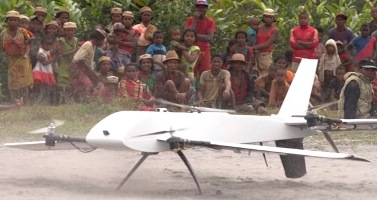 Vayu's drones have vertical take-off and landing capabilities and can transport 2 kg over 60 km. Image credit: Vayu.Dr. Peter Small, founding director of Stony Brook’s Global Health Institute, says that “drones will find innumerable uses such as accelerating the diagnosis of tuberculosis and ensuring the delivery of vaccines.”
Like many of the diseases in developing countries, tuberculosis can only be diagnosed in a lab, and blood and stool samples must be transported quickly. Aware of the lack of roads leading to the communities most heavily burdened by these diseases, faculty and students partnered with drone manufacturer Vayu Inc.
The Ann Arbor-based startup was founded to develop medical delivery drones. The company's unmanned autonomous vehicles have vertical take-off and landing capabilities and can transport 2 kg over 60 km.