New sensor system detects coughs without revealing who’s coughing
Marie Donlon | October 28, 2026Researchers at Binghamton University have developed CoughNet, a sensor network that monitors cough activity in indoor spaces to help medical professionals identify potential respiratory illness outbreaks. The system analyzes audio captured by multiple listening stations to detect coughs and distinguish between previously identified individuals and new sources.
CoughNet uses three Raspberry Pi computers equipped with microphones to monitor coughs in a room. An AI model first determines whether a captured sound is an actual cough. The system then compares the cough’s volume and the time it takes to reach each microphone to determine whether multiple coughs came from the same person, without identifying that individual.
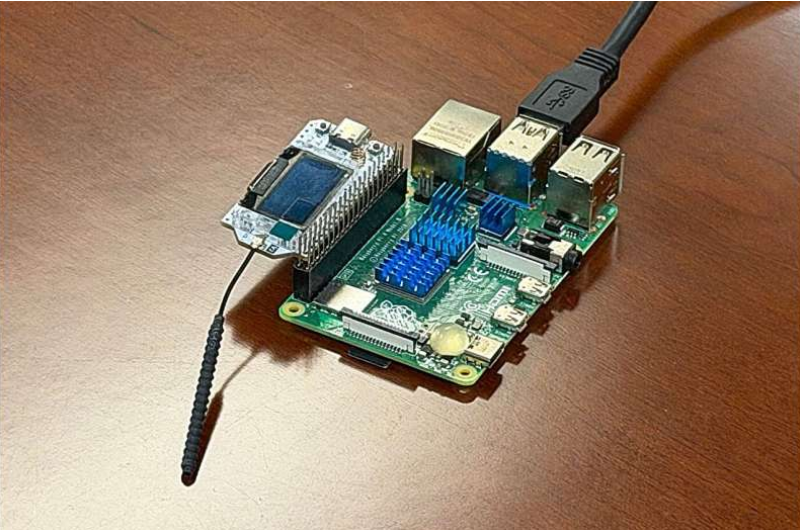 Source: Dali Ismail
The system is designed to be lightweight and privacy-conscious. The Raspberry Pis process clear cough recordings locally and use low-power, long-range LoRa wireless technology to transmit only small audio clips to a nearby, more powerful computer when additional processing is needed. Raw recordings are deleted after analysis, and the system does not use cameras, voice recognition or speech-to-text.
Researchers envision CoughNet being used in hospitals and other indoor environments to monitor increases in coughing and respiratory illness. Future versions could analyze acoustic characteristics of coughs to estimate whether they are associated with conditions such as COVID-19, bronchitis or a flu-like illness. The technology could also potentially be integrated into headphones or wearable devices to alert users to areas with elevated respiratory illness risk.
A prototype of the system, which was detailed in the paper “CoughNet: A Lightweight, Low-Cost, and Energy-Efficient Multiple Coughers Detection and Identification System,” was presented at the 2026 IEEE/ACM Conference on Connected Health: Applications, Systems and Engineering Technologies (CHASE) back in August.