
Study: Red-light Cameras Don't Prevent Car Accidents
Marie Donlon | July 20, 2018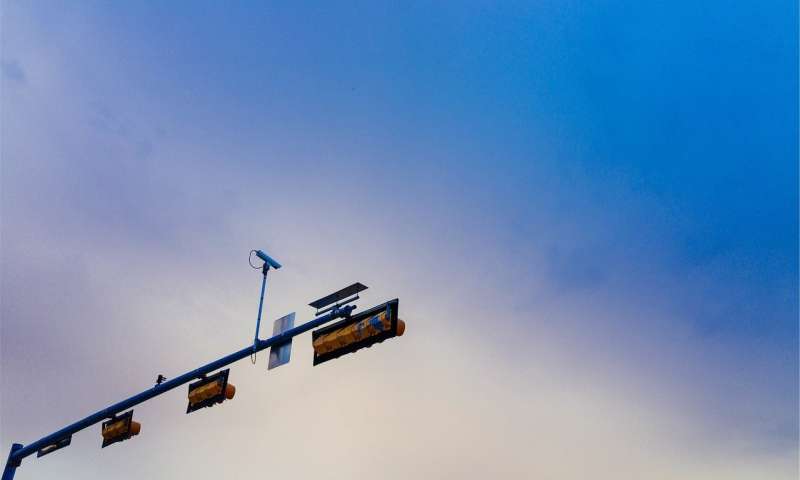 Designed to discourage drivers from rolling (or speeding) through red lights, thereby reducing the number of traffic accidents and injuries at intersections, researchers from Case Western Reserve University have found that red-light cameras are not living up to their intent.
Instead of deterring drivers from running lights, the cameras are shifting traffic patterns. Additionally, when drivers do approach a red-light camera, they often brake hard at the yellow light, often causing minor fender-benders and “non-angle” collisions according to the research findings.
"Once drivers knew about the cameras, they appeared to accept a higher accident risk from slamming on their brakes at yellow lights to avoid an expensive traffic citation — thereby decreasing safety for themselves and other drivers," said Justin Gallagher, an assistant professor of economics at Weatherhead School of Management at Case Western Reserve.
To measure the effectiveness of the red-light cameras, researchers looked at red-light camera data in Houston, Texas, where the researchers studied the incidence of accidents both when the cameras were functioning and later when the cameras had been removed by voter referendum.
According to the data, the installed cameras resulted in 18 percent more non-angle accidents.
"There is no reason to believe that there is a reduction in overall accidents thanks to red-light cameras," Gallagher said. "Our analysis does not support the case that the cameras improve public safety, which is one of the main justifications used by public officials and law enforcement."
The research is published in the Social Science Research Network (or SSRN).


I believe you will find that pro-red light camera people will show you data that the cameras improve safety and the anti-red light camera people will show you that the cameras decrease safety.
There is no question that local governments love the easy money.
Sociology 101 - People become more paranoid when they know BIG BROTHER is watching (and recording), resulting in un-intended 'group herd' reactions and evasions.
Red light cameras are only good for providing extra income to local governments, and body shops, from all the read-ending fender-benders when people slam the brake at a yellow light.