Researchers develop new technique for detecting plastic landmines
Marie Donlon | July 27, 2026Because many modern-day anti-personnel landmines tend to be small in size and often feature a plastic casing that conventional metal detectors cannot register, Binghamton University researchers have devised a new technique that uses machine-learning algorithms to detect plastic landmines over wide areas.
The developers of the new technique explained that ground-penetrating radar, magnetometry and electromagnetic induction are less effective at detecting plastic mines than detecting those that are derived from metal.
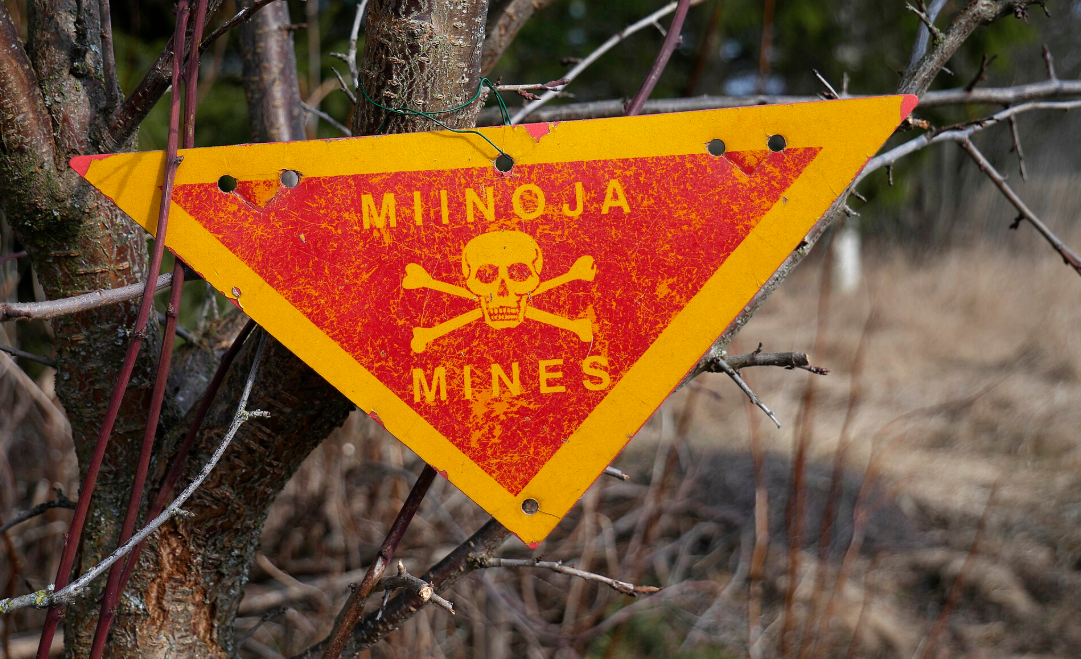 Source: Santeri Viinamäki/CC BY-SA 4.0
Particularly concerning, the team noted, are so-called scatterable landmines, which are intended to be deployed over wide areas. One such mine is the Soviet-era PFM-1, which falls like maple seeds from the sky and is called the butterfly mine.
“It’s harder to take care of a wounded soldier than a dead one. They’re meant to hurt, not kill,” the team explained. “They’re specifically designed with that purpose in mind, and their entire construction is meant to evade detection.”
As such, the researchers developed a drone-based landmine detection system that uses stitched aerial images and a You Only Look Once (YOLO) machine-learning algorithm trained on inert and 3D-printed PFM-1 mines to identify potential landmines across varied environments. Designed for near real-time operation on a consumer-grade laptop without internet connectivity, the system promises to improve the speed and safety of humanitarian demining by supporting trained personnel in the field.
The technique is detailed in the article, “Deep Learning and Multiview-Based Detection of Scatterable PFM-1 Landmines: Performance, Out-of-Sample Evaluation, and Field Readiness,” which is published in the journal Geomatics.