New wearable sensor warns users of environmental hazards
Marie Donlon | July 27, 2026A wearable patch capable of detecting hazards in the environment and then notifying wearers by vibrating against their skin has been developed by a team of researchers from North Carolina State University.
According to its developers, the wearable patch, which features miniature sensors, can detect environmental hazards like dangerous gases or heavy metals present in water. Also incorporated into the wearable is haptic technology, which vibrates once a hazard is detected, thereby alerting the wearer to the potential threat.
 Source: Baha Erim Uzunoglu
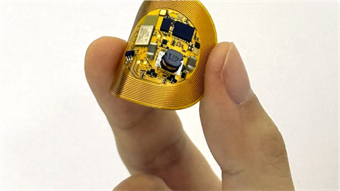
The patch, which is just smaller than the size of a standard driver’s license, also features a microcontroller that functions as the so-called brain of the patch, a small battery, sensors for monitoring six environmental hazards and a small actuator that functions as the haptic motor, which vibrates against the wearer’s skin. Meanwhile, the patch’s exterior includes an array of thin-film photovoltaic cells, which enable the device to harvest solar power as it’s worn.
"Just having a buzzing motor isn't enough; you need to actually feel it," the team noted. "So, we designed tiny textured surfaces that sit at the interface between the motor and your skin, almost like a miniature pattern of bumps. By changing the size and spacing of those bumps, we could control how the vibration is perceived against your skin. That let us fine-tune the sensation so it actually grabs your attention, instead of feeling like a faint buzz you might miss."
Further, the device was also designed to trigger a unique "haptic sequence," or vibration pattern, for each hazard detected, thereby enabling the wearer to determine what environmental hazard they have encountered.
While developing the patch, the team also applied the technology to the creation of an electronic "e-skin" that enables robots to detect environmental hazards and avoid them. To accomplish this, the team combined the sensor patch with a piezoelectric layer that converts vibration into electrical signals. During trials, the system allowed quadrupedal robots to recognize hazards and change their routes, the team explained.
An article detailing the device, “Multimodal, wearable sensors with tactile communication capabilities for human and robotic applications,” appears in the journal Device.