Video: Cutting Cranial Drill Time to Minutes
S. Himmelstein | May 02, 2017A computer-automated drill might replace the laborious and risky surgical process of using hand drills to make complex cranial cuts. University of Utah researchers say the computer-driven drill, similar to those used to machine auto parts, could make cranial drilling almost 50 times faster. Complex cranial cuts made with a hand drill can take 2.5 hours, while the robotic drill mills through bone in 2.5 minutes.
To perform complex surgeries, especially cranial surgeries, surgeons typically use hand drills to make intricate openings, adding hours to a procedure. “It was like doing archaeology,” said William Couldwell, M.D., Ph.D. a neurosurgeon at U of U Health. “We had to slowly take away the bone to avoid sensitive structures.”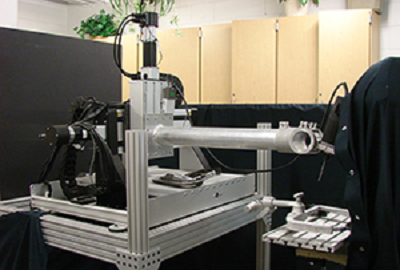 The automated drill accelerates bone removal from 2.5 hours to 2.5 minutes. Source: University of Utah
The researchers designed the drill from scratch to meet the needs of the neurosurgical unit, and developed software that sets a safe cutting path. Doctors use CT scans to program the cutting path to safely bypass nerves, arteries, and other sensitive features.
The new drill was applied to the translabyrinthine opening, a particularly complex jigsaw-like shape that circumnavigates the ear. This type of surgery is performed thousands of times a year to expose slow-growing, benign tumors that form around the auditory nerves. This cut is not only difficult, the cutting path also must avoid several sensitive features, including facial nerves and the venous sinus, a large vein that drains blood from the brain. Risks of this surgery include loss of facial movement.
The device also has an automatic emergency shut-off switch. During surgery, the facial nerve is monitored for any signs of irritation.
Major benefits cited include reduced patient time under anesthesia, surgeon fatigue, risk of infection, and cost of surgery.