Many Consumers Willing to Share IoT Data for Money: Survey
Engineering360 News Desk | April 20, 2016A majority of respondents worldwide (54%) indicate they might be willing to share personal data collected from their smart home with companies in exchange for money, and 70% agree that companies should give coupons and discounts to customers in return for data about device usage, according to a survey of global consumers sponsored by Intel Security.
The survey—which polled 9,000 individuals from Australia, Brazil, Canada, France, Germany, India, Mexico, the United Kingdom and the United States—also found that 77% of respondents believe smart homes will be as common in 2025 as smartphones are today, but 66% are also "very concerned" about smart home data being hacked by cybercriminals.
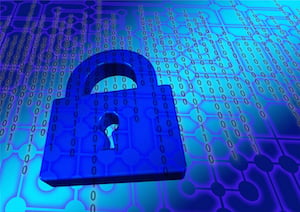 Most consumers want to secure their smart devices through an integrated security package. Image credit: Pixabay. “Smart homes and their associated data have the potential to improve consumers’ everyday lives,” says Steve Grobman, chief technology officer for Intel Security. "Security has to be foundational to the Internet of Things [IoT] and when done right, it can be an enabler of IoT.”
Survey respondents were universally worried about potential security threats from smart homes, with 92% expressing some level of concern that their personal data could be hacked by cybercriminals. Interestingly, almost as many respondents (89%) nonetheless said that if they lived in a smart home, they would prefer to secure all their smart devices through a single integrated security package.
Consumers were less enthusiastic about existing security methods, such as passwords, with 4 in 10 foreseeing passwords as a frustration with smart homes. However, biometrics scored well as an alternative for accessing smart homes. When asked to select several preferred forms of biometric security, 54% opted for fingerprints, 46% for voice recognition and 42% for eye scans.
Additional survey findings include:
· Compared to other generations sampled, more Millennials indicated they might be comfortable taking money, discounts and coupons in exchange for sharing their behavioral data from their smart home devices (63% for money, 44% for discounts and 29% for coupons).
· The most commonly considered smart devices are smart lighting (73%), smart kitchen appliances (62%) and smart thermometers or boiler systems (60%).
· Over half of respondents expect gas and electric (57%) bills and heating and cooling (55%) bills to be reduced in a smart home.