LG unveils AI-powered VRF heat pump with new compressor technology
GlobalSpec News Desk | November 20, 2026LG Electronics, a unit of South Korea’s LG, unveiled the Multi V 7, a new variable refrigerant flow (VRF) air-to-air heat pump system for commercial heating and cooling applications.
Presented at the Harfko 2026 HVAC exhibition in Goyang, South Korea, the system combined on-device and cloud-based artificial intelligence (AI) to optimize operation based on installation conditions, user behavior and changes in the surrounding environment.
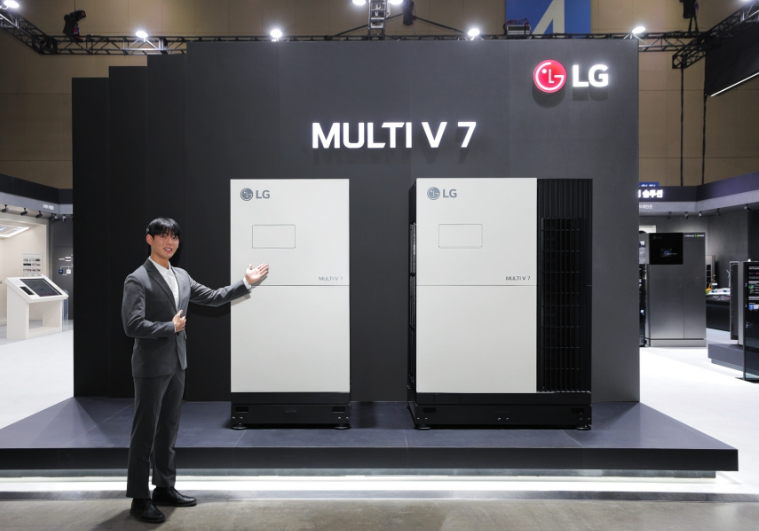 Source: LG Electronics
According to LG, the on-device AI continuously analyzed operating conditions and usage patterns in real time, while the cloud-based AI provided additional analysis to optimize system performance and reliability.
The Multi V 7 also featured an AI Smart Care function that evaluated different operating scenarios and selected strategies designed to balance thermal comfort and energy efficiency. Additional features included adaptive noise control and AI-based fault prediction and diagnostics.
The system incorporated LG’s newly developed Spin X compressor, which featured a redesigned internal structure, a two-way oil supply system and real-time oil condition monitoring.
LG said the compressor technology was designed to improve heating and cooling performance, energy efficiency and operational stability compared with previous designs but did not provide further details.
The manufacturer did not disclose the system’s rated heating and cooling capacities, coefficient of performance (COP), seasonal efficiency ratings, refrigerant type or operating temperature range.
Hyundai Engineering & Construction developed a residential air quality management technology that combined indoor air purification with room-specific ventilation to improve indoor air quality while reducing unnecessary energy use.
The Allergy Care Solution integrated a high-performance energy recovery ventilator with a room-by-room ventilation system that directed fresh air to selected areas of a home.
The energy recovery ventilator incorporated electrostatic spray technology, which electrolyzed moisture in the air, and photoionization technology, which used a light source and photocatalytic reactions. According to the company, the technologies reduced airborne bacteria by up to 99% and harmful gases by up to 96%. The Korea Testing Laboratory and Korea Conformity Laboratories verified the performance.
Unlike conventional systems that ventilated an entire residence uniformly, the new technology allowed airflow to be increased in specific rooms as needed. Its room-by-room ventilation system concentrated fresh air delivery in user-selected spaces, such as kitchens and children's rooms. Hyundai Engineering & Construction reported ventilation performance of six or more air changes per hour, exceeding the legal minimum of 0.5 air changes per hour.
Energy recovery ventilators reduce heating and cooling losses during ventilation by recovering thermal energy from exhaust air as indoor and outdoor air are exchanged. In multifamily housing, ventilation systems must balance indoor pollutant and fine dust control with energy efficiency. Adjusting airflow by room can help maintain air quality in occupied spaces without ventilating every room at the same rate.
Hyundai Engineering & Construction planned to integrate the system's functions into residential platform applications, including My HILLs and My THE H. The company also planned to analyze indoor air quality data to automatically select operating modes and allow residents to monitor room-specific air quality and equipment status.
An official at the HMG Construction Technology Research Institute said growing concerns about environmentally related diseases and indoor air quality had increased the importance of technologies for systematically managing residential environments. The company expected the Allergy Care Solution to provide differentiated value for residents.