Enzyme-powered microbubble bots navigate tumors to deliver drugs
Marie Donlon | February 19, 2026A team of researchers from Caltech and the University of Southern California has developed a microrobot for drug delivery within the body.
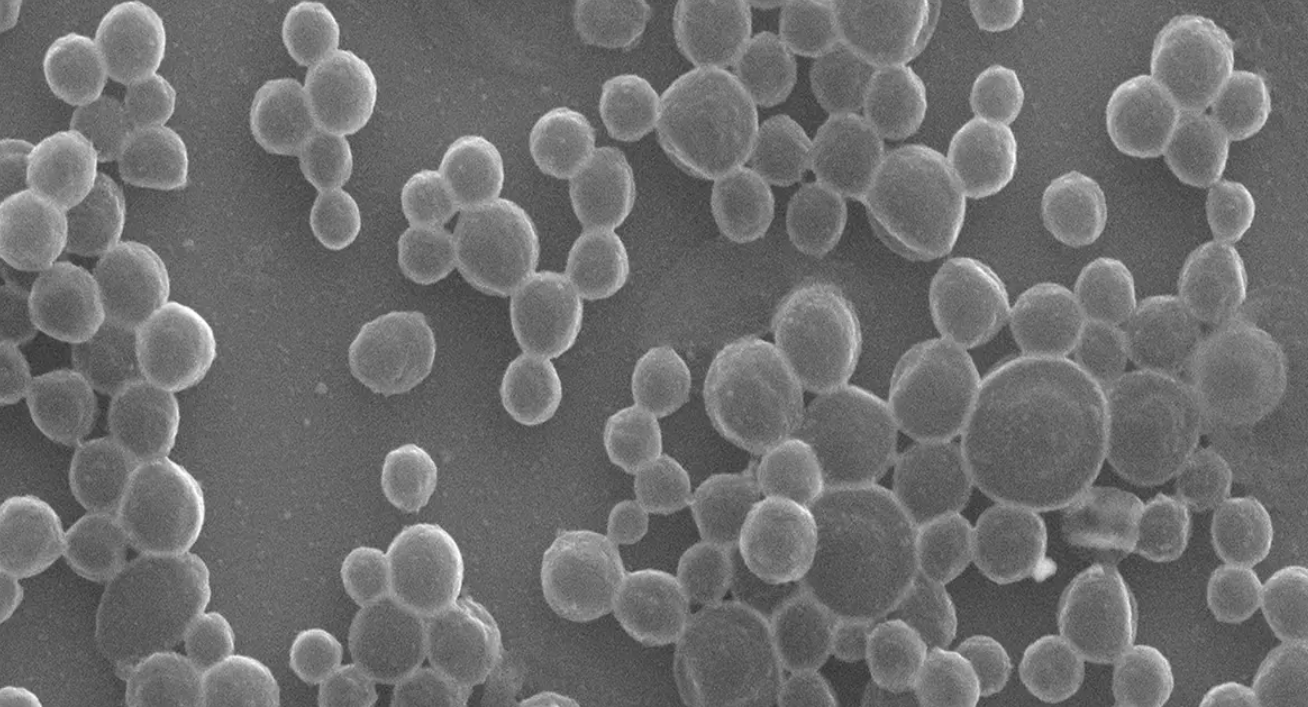
According to its developers, the enzyme-powered microbubble robots can navigate toward tumors, carry anti-cancer drug payloads and release them on demand using ultrasound technology.
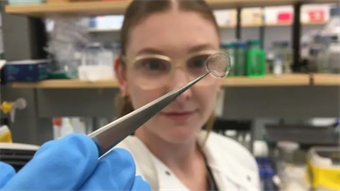
 Source: Gao Lab/Caltech
What distinguishes these microrobots from earlier microrobots that relied on 3D printing, hydrogel shells and cleanroom fabrication, is that they are constructed entirely from protein-shelled microbubbles.
The team used ultrasound agitation to produce thousands of identical microbubbles quickly and at low cost. Once the bubbles are formed, the protein shells offer a way to add functionality.
Specifically, the researchers chemically modified surface amine groups to attach enzymes, drugs and nanoparticles, thus creating microrobots that can move, sense their environment and deliver therapy.
The team explained that movement is achieved via urease, which is an enzyme attached to the bubble surface that reacts with urea, which is a waste product present in the body, thereby creating ammonia and carbon dioxide.
Chemical byproducts reportedly gather on one side of the bubble more than the other because the enzyme is unevenly distributed. This creates the thrust that propels the robot forward.
Two versions of the microrobots were developed with one version featuring magnetic nanoparticles that enable operators to steer the bubbles toward a target via external magnets while tracking them with ultrasound imaging, and a second version that is fully autonomous.
To develop the fully autonomous version, the researchers added another enzyme, dubbed catalase. With that addition, the robots responded to hydrogen peroxide, which is found at higher concentrations in tumors and inflamed tissue, thus allowing the bubbles to move toward tumors without imaging or external control.
“In this case, you don’t need any imaging; you don’t need any external control. The robot is smart enough to find the tumor,” the team noted. “The bubble robot’s autonomous motion, together with its ability to sense the hydrogen peroxide gradient leads to this targeting, which we call chemotactic tumor targeting.”
As soon as the so-called bubble bots reach the tumor, focused ultrasound is used to burst the bubbles, resulting in a sudden collapse that releases the drug payload and mechanically enhances its penetration into the tumor.
During lab trials, the team trialed the bubble bots in mice with bladder cancer, which led to a roughly 60% reduction in tumor weight over 21 days versus the results in animals treated with the drug alone.
“This bubble robot platform is simple, but it integrates what you need for therapy: biocompatibility, controllable motion, imaging guidance, and an on-demand trigger that helps the drug penetrate deeper into the tumor,” the team concluded.
The study, “Enzymatic microbubble robots,” was published in the journal Nature Nanotechnology.