Interest in the 'flying wing' continues, despite engineering hardships
Andy Tomaswick | December 16, 2025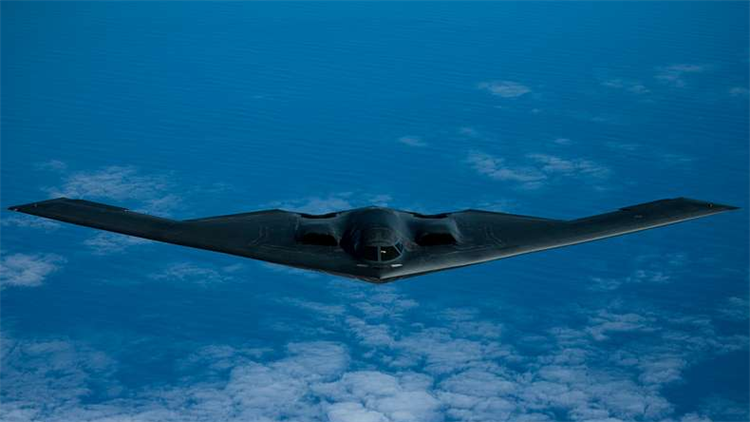
The race to decrease the carbon emissions of the aerospace industry is on. Companies and regulatory agencies around the world are looking at dozens of potential solutions that could decrease the carbon footprint of the industry, which accounts for around 3% of total global carbon emissions.
Some of that effort is focused on operating jets on different fuels, such as those that are sustainably grown, or even running them entirely on hydrogen fuel cells. But some of that effort is also focused on lower the demand for fuels in the first place, by increasing the efficiency of the aircraft themselves.
One of the most promising technologies is known as the blended wing body (BWB) - a concept that has been around for over 100 years but, thanks to recent technological advances, whose time might finally be here.
Physics of efficiency
Traditional aircraft have a cylindrical fuselage with wings, which provide the majority of the lift of the system, attached to it at an angle. This design has worked well for decades, and has been incrementally improved over that time, but it is reaching the limit of its lift to drag ratio, one of the key components in calculating the efficiency of an aircraft.
In a BWB, the main body of the aircraft is flattened into an airfoil shape, which makes it look like a singular “flying wing,” the name given to early prototypes of the design. Dominant features of the design include smooth transitions between the flattened body and the wings, which gives the aircraft its main advantages.
A BWB has two main advantages of a traditional aircraft design in terms of efficiency. First, it eliminates two major sources of drag present in traditional aircraft. It minimizes the amount of surface area exposed to air flow, which lessens skin friction drag. It also implements a seamless transition between the body of the aircraft and the wing, which largely eliminates the parasitic interference drag caused by the interactions of different air streams at the intersections of different shapes on the aircraft, such as where the wing meets the fuselage.
Second, a BWB uses the entire airframe as the lifting surface, rather than primarily the wings. A typical cylindrical fuselage only generates about 12% of the total lift of an aircraft, whereas the BWB’s airfoil-shaped body can generate as much as 40% of the lift of the overall craft. This dramatic increase in lift, combined with the decrease in drag, suggests that BWBs could have a 25% higher lift/drag ratio than a traditional airplane, which translates roughly into a 25% fuel savings.
One other feature doesn’t necessarily have an impact on efficiency, but more on the general environmental impact of the craft. In most BWB designs, the engine is placed on top of the body, allowing the structure of the aircraft to dampen the noise it makes down on the ground by as much as 40 dB, a dramatic shift given the logarithmic nature of the decibel scale. All of the benefits of the BWB also play off of each other in a virtuous cycle; higher lift means less thrust is needed to cruise, allowing for smaller engines which are more fuel efficient and quieter. The blended design lessens the structural loads on some parts of the aircraft, allowing designers to use lighter materials, thereby decreasing the overall weight and again, increasing efficiency.
The pressures of radical redesign
So with all these advantages, why hasn’t someone already made a commercial plane out of this technology? Engineers and designers have been attempting to for decades, but they run into three main problems that are only now becoming more tractable.
The first, and by far the most difficult, is control. When BWBs were first proposed by Germany aviation pioneer Hugo Junkers in 1910, it took him 19 years to get a prototype off the ground. And once he did, his Junker G.38 had a hard time remaining stable. The lack of a tail, which acts as a self-stabilization mechanism on traditional aircraft, made early BWBs notoriously hard to control. The complex aerodynamics of air around the BWB’s body were too much for an individual pilot to react and adapt to, leading to unrecoverable spins or tumbles in some cases.
It took the better part of a century, but in the 1980s, the aerospace industry introduced a new control system called fly-by-wire (FBW), which doesn’t require the pilot to react immediately to changes in environmental conditions around the aircraft. These systems automatically adjust based on pilot input and environmental conditions to stabilize the ride in a fast-moving aircraft. But perhaps most importantly, FBW replaces direct mechanical linkages with computer control that allows a flight computer to manipulate thousands of different control surfaces all over the aircraft, stabilizing it in a way that would never be possible if a pilot were required to manipulate all of them.
While FBW control might have solved one of the more pressing technical challenges of BWBs, there is another that has to do with its fuselage. Part of the reason cabins on modern aircraft are cylindrical is because its easy to pressurize a cylinder. Aerospace engineers understand how the forces pushing on both the inside and outside the cylinder work, and they can make sure the forces cancel out without exploding the locked in pressure outward, or buckling in on itself if the pressure outside rises above that on the inside. Providing the same pressure stabilization on a flattened airfoil is a much harder proposition and using traditional materials to counteract the increased loads it requires would completely negate the fuel efficiencies of the design. Engineers are looking at materials and structural design to solve this problem, but at the very least it appears tractable.
Customer experience, on the other hand, might prove difficult. With a wide airfoil design, passengers would have a completely different experience. Being stuck in the middle of an airframe, meters away from the nearest window could prove disorienting. Those seated closed to the body’s edges could experience increased bouts of motion sickness as they are lifted up and down significantly more than in a traditional aircraft, as the plane experiences turbulence or banks to maneuver. However, it could also prove a benefit, as passengers may not feel like they are in a motorcoach in a sky.
In addition, interfacing BWB designs with existing airport infrastructure could prove tricky. Land gear stance is wider than some runways, and traditional technologies like air bridges and loading machines would have to be fundamentally redesigned. That would require a significant up-front cost on the part of the airport managers, and it's unclear whether the benefits from more efficient aircraft will filter down to them enough to justify that expenditure.
As a result of these challenges, most flying wing projects and prototypes never take-off, literally or figuratively. In fact, the only human-piloted flying wing to enter production is the notable B2 Spirit stealth bomber. It owns a niche role in U.S. military, which is better able to accommodate the flying wing's unique needs.
A place on the tarmac remains
Some companies are willing to place a bet on the technology though. Delta has funded a development of a plan concept called the Z4 from a company called JetZero, which is targeted to replace the carrier’s fleet of aging Boeing 767s on its medium-haul flights. Natilus, a start-up based in San Diego, is working on an autonomous cargo aircraft that could increase traditional payload volumes by 40% while decreasing fuel consumption by 30%. Airbus has even invested in a BWB design as part of its fleet of zero-emission planes.
Given all the economic forces pushing toward commercialization for the technology, it's likely only a matter of time before the world sees its first commercially viable BWB jet. Some of the companies currently working on them hope to get regulatory approval, which in itself will be a major hurdle for these novel designs, by the mid-2030s. That could put passengers flying on these massive and efficient craft by the 2040s. It might take 130 years to finally realize the original dream of a flying wing, but given its advantages over traditional aircraft, it's likely inevitable that the dream will eventually become reality.