Smart dental implants mimic the feel and function of natural teeth
Marie Donlon | July 11, 2025A team of researchers from Tufts University School of Dental Medicine and Tufts University School of Medicine has developed a new approach for creating smart, natural-feeling and functional dental implants.
Although in the beginning stages of development, the team has reportedly shown early success with the "smart" implant as well as a new, gentler surgical technique with rodents.
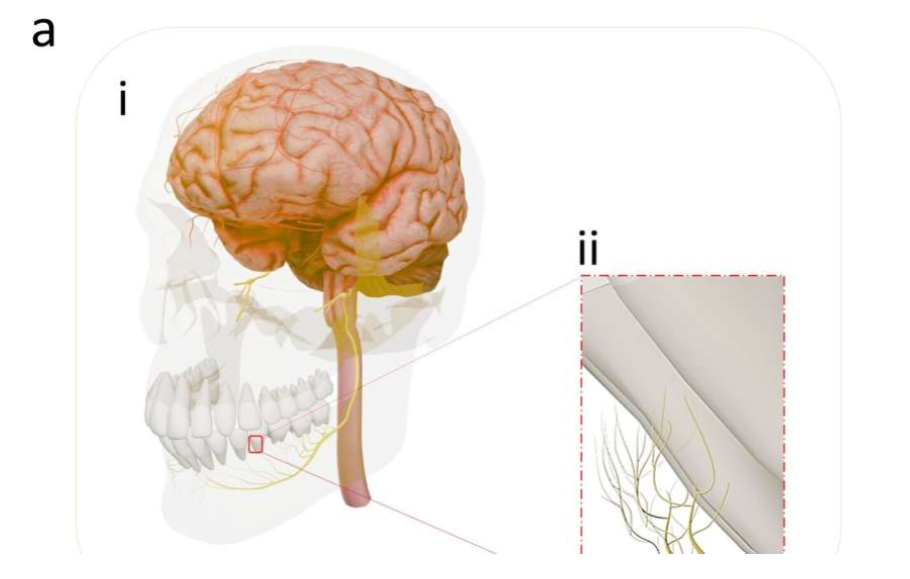 Translational implication of the trial investigation. Source: Scientific Reports. DOI: 10.1038/s41598-025-99923-8
"Natural teeth connect to the jawbone through soft tissue rich in nerves, which help sense pressure and texture and guide how we chew and speak. Implants lack that sensory feedback," explained the authors of the study.
To replicate this with traditional dental implants, dentists tend to use a titanium post that fuses directly to the jawbone to support a ceramic crown. However, the surgery necessary to accomplish this often cuts or damages nearby nerves.
The team explained that with their new, gentler approach, they developed an implant enveloped in a biodegradable coating to tie these inert pieces of metal into the body's sensory system. This biodegradable coating reportedly features stem cells along with a protein that encourages them to multiply and convert into nerve tissue. Specifically, as the coating dissolves during the healing process, the stem cells and protein are released, thereby stimulating the growth of new nerve tissue around the implant.
Further, the coating also features tiny, rubbery particles that function like memory foam. The researchers explained that these nanofibers are compressed so that the implant is smaller than the missing tooth upon insertion, but then the nanofibers gently expand once fit into the socket. This approach allows for the preservation on the existing nerve endings in the tissue surrounding the implant.
The researchers suggest that this approach promises to help reconnect nerves, enabling the implant to 'talk' to the brain — much like a real tooth. Likewise, the team suggests that this approach might also be appropriate for other types of bone implants, including those used in hip replacements or fracture repair.
The team discovered that six weeks after performing this procedure on rats, the implants stayed firmly in place and without signs of inflammation or rejection. The team also noted via imaging a distinct space between the implant and the bone, which indicates that the implant fused via soft tissue instead of fusing with the bone, as happens with traditional implants. This, the researchers concluded, promises to restore the nerves surrounding it.
An article detailing the new approach, “Surgical considerations towards inducing proprioceptive feedback in dental implants,” appears in the journal Scientific Reports.