Diagnostic tech rapidly identifies pathogens with near 100% accuracy
Marie Donlon | March 31, 2025A diagnostic technique that uses artificially engineered polymers — otherwise known as peptide nucleic acid (PNA) — as probes has been developed by researchers at UNIST.
The technique, called fluorescence in situ hybridization (FISH), detects fluorescent signals produced when probe molecules bind to particular genetic sequences in bacteria. The researchers noted that the FISH method uses two PNA molecules simultaneously. The team analyzed the genomic sequences of 20,000 bacterial species to design PNA sequences that target the ribosomal RNA of specific species, the researchers explained.
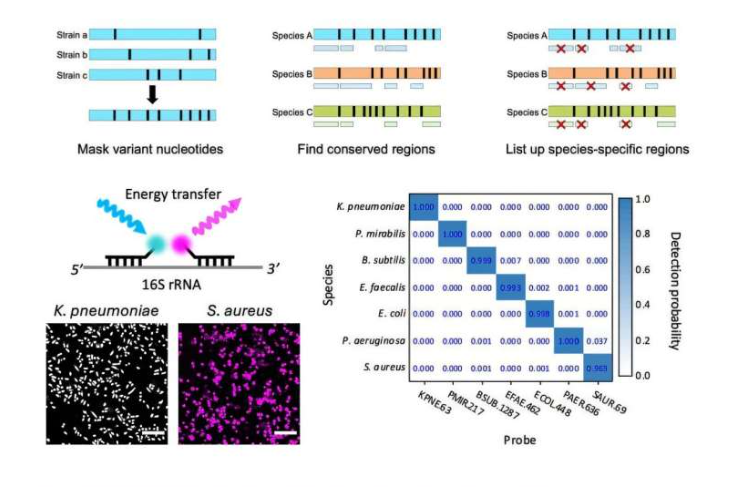 Schematic representation illustrating the findings of the study. Source: Biosensors and Bioelectronics. DOI: 10.1016/j.bios.2024.116950
The team suggests that the new technique is remarkably faster and more accurate than traditional bacterial culture and polymerase chain reaction (PCR) analysis, and subsequently shows promise for reducing mortality rates in conditions like sepsis, where the timely administration of antibiotics is critical.
During lab tests, the technology detected seven bacterial species — E. coli, Pseudomonas aeruginosa, and Staphylococcus aureus, among them — with over 99% accuracy for all species but S. aureus, which was detected with a 96.3% rate of accuracy. The method's effectiveness was further confirmed in mixed bacterial samples. Additionally, both Enterococcus and E. coli were detected with a more than 99% rate of accuracy when tested together.
"This method will aid in the diagnosis of infections requiring immediate antibiotic treatment, such as sepsis, urinary tract infections and pneumonia, while also helping to reduce unnecessary antibiotic usage."
An article detailing the new technique, “Fast and accurate multi-bacterial identification using cleavable and FRET-based peptide nucleic acid probes,” appears in the journal Biosensors and Bioelectronics.