New plant-based wound dressing blocks infection before it develops
Marie Donlon | August 07, 2026A team of researchers from the University of Bath has developed a plant-based dressing capable of delivering antibiotics directly to wounds during the early stages of infection.
According to the developers of the dressing, this is reportedly the first time this family of sustainable furan-based polymers — which has previously been investigated for sustainable plastics and packaging applications — has been applied to infection-fighting wound dressings.
 Source: Bioactive Materials (2026). DOI: 10.1016/j.bioactmat.2026.06.022
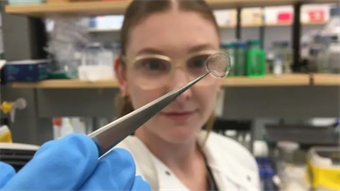
Because wound infections occur when bacteria rapidly form protective biofilms, thereby delaying healing and making infections more difficult to treat, the University of Bath team developed a two-sided dressing composed of sustainable polymers, which are plastic-like materials derived from plants instead of petrochemicals. The team explained that while one side of the dressing instantly releases antibiotics into the wound, the other side functions as a barrier for maintaining the protected healing environment.
As such, the dressing intervenes before the biofilm grows — when treatment is most effective — quickly releasing the antibiotic and reaching effective concentrations within four hours, thus reducing biofilm creation by more than 90%.
The team created the dressing from two plant-based layers, each with different properties. Those plant-based polymers were spun into a thin mesh of microscopic fibers and the antibiotic tetracycline was then incorporated on the wound-facing side, while the outer side of the dressing was designed to repel water to reduce moisture loss and promote healing.
"The two materials we used are very similar chemically; they differ by only two carbon atoms, but by spinning them into ultrafine fibers, we can amplify these tiny molecular differences into dramatically different behaviors,” the team explained. "This allowed us to create a smart, two-sided dressing without any additional chemical modification, simultaneously guiding the antibiotic toward the wound while helping to prevent unnecessary loss of the drug away from the injury site and providing a barrier to protect the wound."
During model wound trials conducted on two common wound-infecting bacteria — Staphylococcus aureus and Pseudomonas aeruginosa — the dressing reportedly demonstrated a significant reduction in bacterial growth and biofilm formation following application of the dressing. The dressing also proved compatible with human skin cells, showing no signs of toxicity during the trials.
An article detailing the dressing, “Janus electrospun nanofiber membranes from bio-based furan polyamides for antibacterial wound care,” appears in the journal Bioactive Materials.