CPC Pumps launches the BB5 complementing International API 610 range
Diana Aoun | March 29, 2023The all-new HB Model BB5 from CPC Pumps complements its heavy-duty process pumps range. Featuring best-in-class hydraulic performance coverage and a unique design, the BB5 pump line provides tailor-made solutions for extreme process-critical applications.
The BB5 features a double-casing design as well as improved sealing designs enabling deployment in high-temperature and high-pressure applications as well as those with low specific gravity fluids. In addition, the diffuser design allows for individually unique stages in the pump to support highly specialized applications, such as compressible fluids where flow rates within the pump are impacted by the local pressure of each stage.
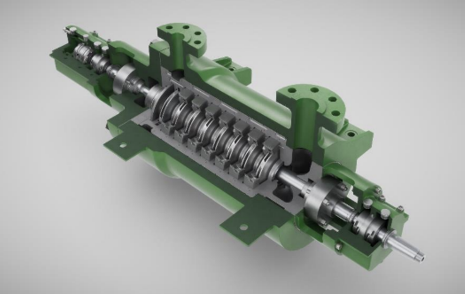 Source: CPC Pumps
The BB5 is fully compliant with API 610 requirements (the standard for centrifugal pumps for petroleum, petrochemical and natural gas industries). The BB5 operates with a flow rate above 1,000 m3/h (4,400 U.S. gpm) and head above 3,660 m (12,000 ft). It can handle temperatures up to 450° C (842° F).
In addition to its wide hydraulic coverage and tailored hydraulic selections, standard features also include diffuser and volute designs, balancing drum or hydraulically opposed impeller arrangement for thrust balancing, integral balance line for minimized chamber pressures, and a heavy baseplate, drip rim or drip pan designs. There are also optional features, such as alternative flange sealings, high-pressure special casing design, fan/heating-sink bearing housing cooling arrangements, and magnetic bearing housing isolators.
Applications for CPC centrifugal pumps have traditionally been in the refining and petrochemical industries ranging from boiler feed water, cryogenic duties, seawater injection and gas plants to pipelines, amine, energy recovery and LNG. Pumps for such applications can contribute to improving energy efficiency and enhance current operations. The new BB5, however can help to sustainably lower environmental impacts. It can be used in carbon capture, utilization and storage (CCUS), processes that are central to lowering CO2 emissions, therefore, playing a vital role in reducing emissions and in the transition to net zero targets.