
A washing machine filter that dissolves plastic microfibers
Marie Donlon | September 27, 2019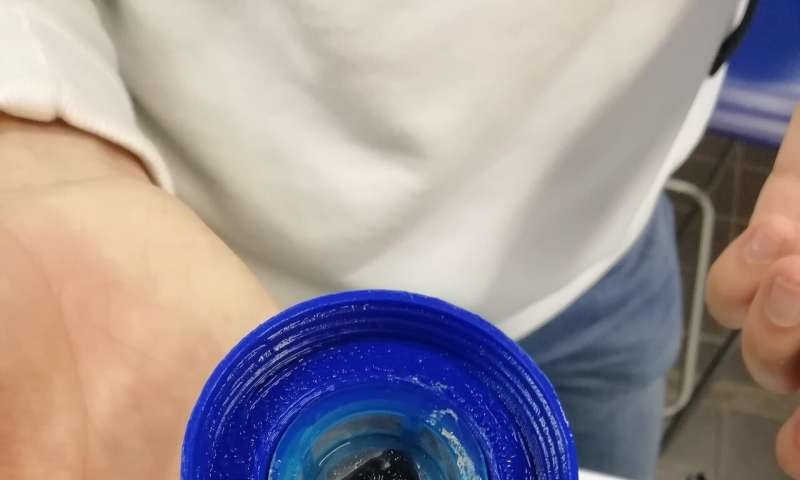 Microfibers caught in the filter. Source: University of ExeterA new 3D printed filter created by researchers from the University of Exeter in the U.K. can degrade and dissolve the plastic microfibers that discharge from clothing while in the washing machine.
The so-called “smart filter" captures the plastic microfibers and relies on enzymes to break them down into two different byproducts — terephthalic acid and ethylene glycol — that can safely be released into the water system. Although potentially toxic in larger concentrations, terephthalic acid and ethylene glycol can be diluted to safe levels by the volume of water released during the washing cycle.
Designed to be fitted to the outlet of virtually any type of household washing machine, the filter reportedly captures and breaks down roughly 75% of the microplastic fibers discharged from clothing during washing. The filter was developed to help combat the number of microplastics that are released from fibers during wash cycles, which subsequently make it into the world’s oceans, the foods we consume and even the air that we breathe, according to researchers. Currently, estimates are that every wash cycle releases hundreds of thousands of microfibers, with experts suggesting that over a third of the microplastics in the world's oceans are discharged from clothing.
"The most common synthetic fibre used in clothes is polyethylene terephthalate (PET), and the main enzyme we use to break it down is known as PETase," said team member Lydia Pike.
Hoping to eventually bring the filter to market, the team is exploring the use of different enzymatic concentrations. Likewise, the team is also developing an app to use in conjunction with the filter, sharing data that will assist with increasing the efficiency of the enzymes, while also helping to reduce plastic pollution, according to the team.
While the team has focused entirely on using the filter in concert with commercial washing machines, they also see possible use cases for the filter in places like clothing factories and water treatment plants, for instance.

Neat. But can they extrapolate? That is, with all the plastic crap in the oceans and rivers, can the technique be expanded to this much larger stuff? I'm probably dreaming, but such a huge expansion would be valuable to the world if . . . .