Cell cultivation protocol could spark clinical-grade tissue therapies
Engineering360 News Desk | January 17, 2019Growth media that support the expansion of mesenchymal progenitor (MP) cells from stem cells in a clinically 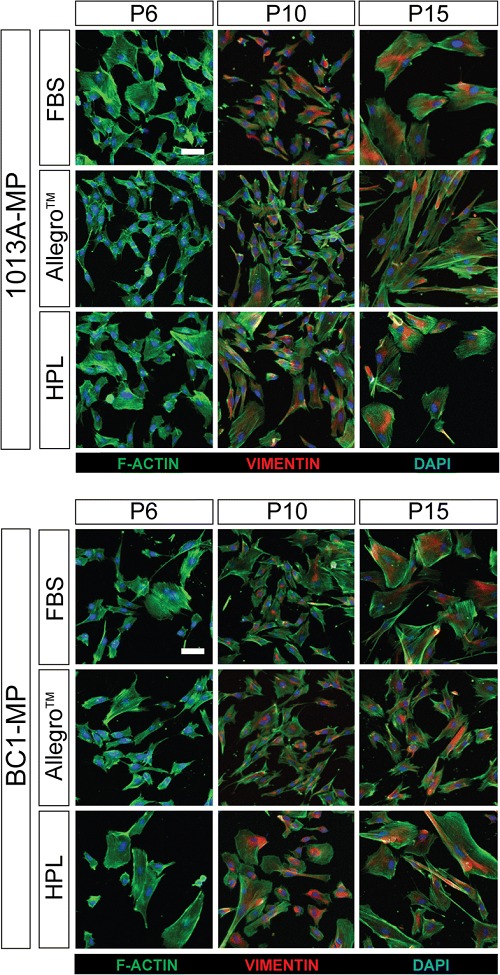 Cell painting showing the production of the cytoskeletal proteins F-actin and vimentin in induced pluripotent stem cell-derived mesodermal progenitors (line 1013A and BC1) cultured in different media. Source: New York Stem Cell Foundation Research Institutecompatible setting, without the use of animal-derived materials, have been developed by researchers from the New York Stem Cell Foundation Research Institute. The advance marks progress toward clinical-grade bone and cells for the treatment of bone disease and injury.
MP cells resemble mesenchymal stem cells (MSCs), which can form bone cells, cartilage cells, muscle cells and fat cells, among others, and can modulate the behavior of many other cell types in the body. MSCs are a common target for cell therapies in which healthy cells are introduced into the body to treat diseases or reconstruct tissues and organs, but they do not expand enough to provide the amount needed for an effective therapy. MP cells can be produced in large numbers for each patient when generated from induced pluripotent stem cells, and hold promise for the treatment of blood, heart and immune diseases, as well as repair of damaged bone and cartilage.
The researchers compared MP cells grown in a medium supplemented with fetal bovine serum, a product derived from cows, to MP cells grown in two xeno-free media without animal products. One was supplemented with human platelet lysates and one with commercial, high-performance good manufacturing practice (GMP), medium. MP cells grown in the xeno-free and GMP media showed slightly different cell morphology, expansion potential, gene expression and cytokine profile than those grown in the medium containing fetal bovine serum, but were deemed healthy and functional.
The study is published in Stem Cell Research and Therapy.