SLIPs for Regeneration of Damaged Tissue
Riia O'Donnell | June 01, 2016A method developed by researchers at the Wyss Institute for Biologically Inspired Engineering and the John A. Paulson School of Engineering and Applied Sciences at Harvard may help transfer regenerating cell sheets to damaged tissues in patients, directly from the culture dish.
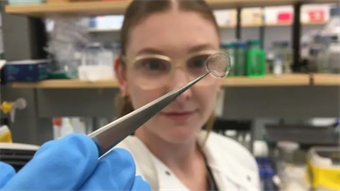
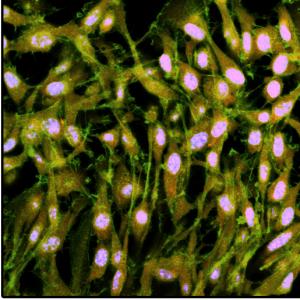 MSCs cell sheet grown on a transferable polymeric matrix. Image source: Wyss Institute at Harvard UniversityWhile transplanting dense and coherent preformed sheets of regenerative stem cells directly on to damaged heart, cartilage, or bone tissue is typically a more optimal route to recovery than transplanting loose cells, the ability to release cells that are grown quickly, and without affecting their efficiency, in a culture dish has been challenging. Removing them from the substrate and keeping them intact has been difficult.
The Harvard team has developed a process to induce slipperiness on the growth supporting surface at will. This allows for fast, efficient and far less costly recovery of intact sheets of mesenchymal stem cells (MSCs) which have a broad range of potential for regenerative medicine.
The team used an already developed anti-fouling strategy, Slippery Liquid-Infused Porous Surfaces (SLIPS), and built upon that process. They used PDMS in a cell culture dish infused with a chemically matched, non-toxic silicone oil to saturation. They then coated the infused polymer with human fibronectin (FN), which is an extracellular matrix protein used to repair damaged tissues. Once the sheets of cells are grown on top of the oil-infused, FN-coated polymer, they inject a small amount of oil beneath the cell layer.
Because the polymer is already saturated, the oil moves as a pool, detaching the entire sheet, including the FN substrate in a matter of minutes, faster than current methods. With a filter paper, the researchers transfer the cell sheet to the new surface. In the future this may be replaced by target tissues for in vivo regeneration.
The researchers say they believe they will be able to tailor the process for a variety of cell sheets for diverse regenerative processes.