Biodegradable Graphene Key to Successful Biomedical Devices
Siobhan Treacy | August 23, 2018Researchers from the University of Strasborg, CNRS, Karolinska Institute, and the University of Castilla-La Mancha have teamed up to create a new kind of graphene. This graphene is biodegradable and comes from an unlikely source: our own bodies.
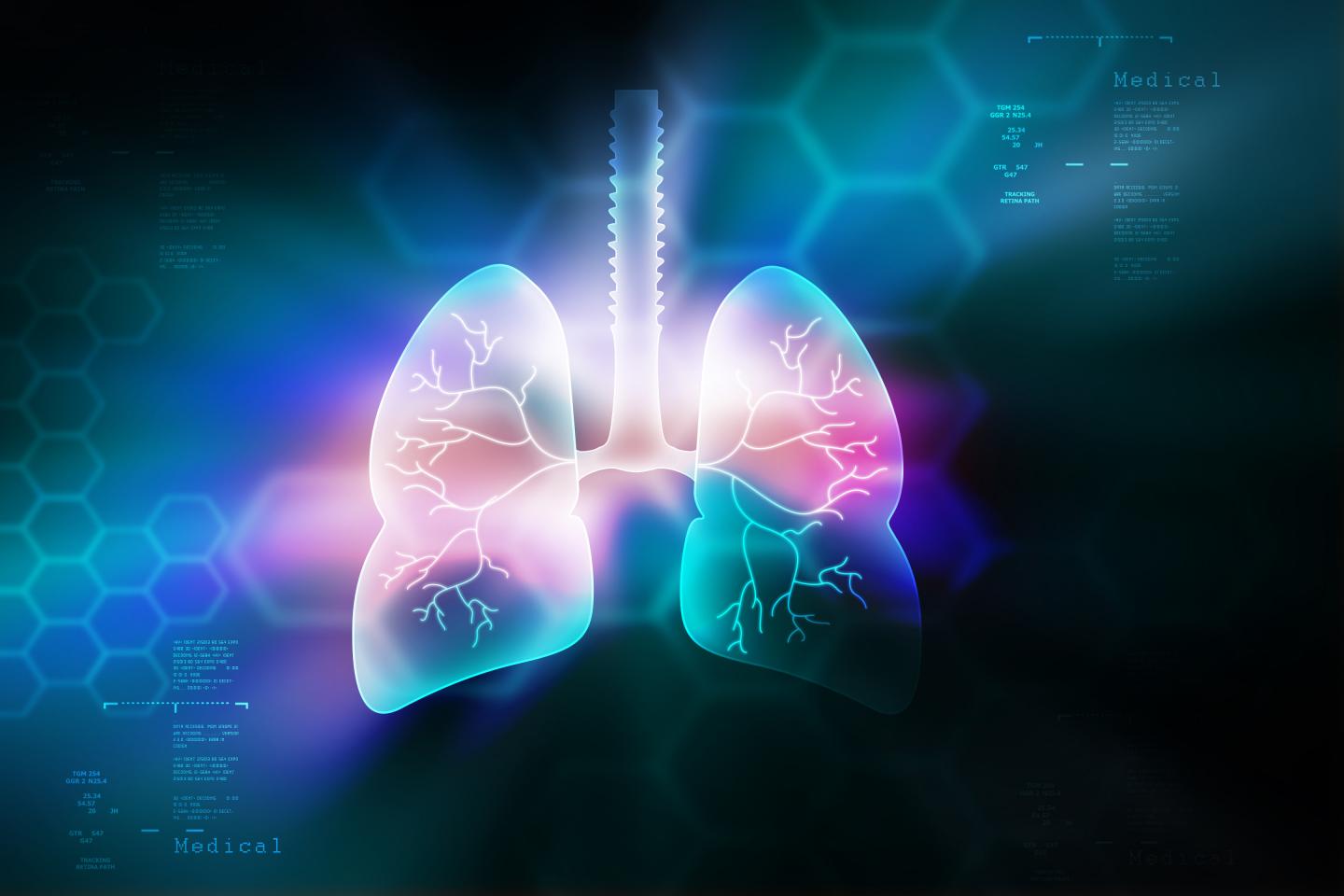 A human lung enzyme can biodegrade graphene. (Source: Fotolia)
The new graphene is broken down by myeloperoxidase (MPO). MPO is an enzyme that is naturally created in human lungs. MPO is released by neutrophils, which are white blood cells that kill unfamiliar bodies that don’t naturally occur in the body. After testing the new graphene, the researchers found that MPO could easily break it down. The team tested the effects of MPO on graphene in single- and multiple-layer form.
Alberto Bianco, a researcher at Graphene Flagship Partner CNRS, explains, "We used two forms of graphene, single- and few-layer, prepared by two different methods in later. They were then taken and put in contact with myeloperoxidase in the presence of hydrogen peroxide. This peroxidase was able to degrade and oxidize them. This was really unexpected, because we thought that non-functionalized graphene was more resistant than graphene oxide."
Biodegradable graphene is important because biomedical technology is rapidly developing. For flexible biomedical electronics to be implemented in the body, they must be able to be expelled from the body. That is where MPOs and biodegradable graphene come in.
Prof. Maurizio Prato, the Graphene Flagship leader for its Health and Environment Work Package said, “The enzymatic degradation of graphene is a very important topic, because in principle, graphene dispersed in the atmosphere could produce some harm. Instead, if there are microorganisms able to degrade graphene and related materials, the persistence of these materials in our environment will be strongly decreased. These types of studies are needed. What is also needed is to investigate the nature of degradation products. Once graphene is digested by enzymes, it could produce harmful derivatives. We need to know the structure of these derivatives and study their impact on health and environment," he concludes.
The next step for this technology is to go beyond lab testing and test it in actual humans. The paper on the biodegradable graphene was published in the Journal of the Gesellschaft Deutscher Chemiker.