Gene Therapies Get a Boost from New Technology
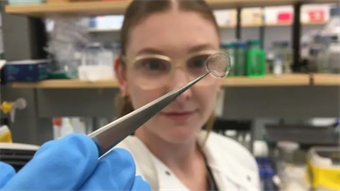
Amy J. Born | March 01, 2018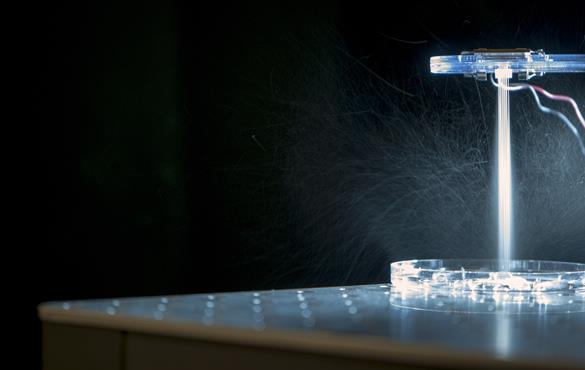 Acoustic shear poration (ASP) device. Source: J. Mark Meacham, Washington University in St. Louis
One major obstacle in the emerging field of gene therapy is getting the engineered DNA molecules into the cells. Now, researchers at Washington University in St. Louis have come up with a solution.
J. Mark Meachem, assistant professor of engineering and materials science, and his team have developed a device that combines mechanical and electrical forces to more effectively insert large molecules, such as DNA, RNA and proteins, into cells and propel them into the cell nucleus.
The device uses a technique known as acoustic shear poration (ASP) that evolved from Meachem's earlier work at Georgia Institute of Technology. Combined with electrophoresis, this acoustically driven droplet generator applies "focused mechanical forces, such as a fluid shear, which are pushing and pulling on the cell using fluid motion," Meacham said. "We take a suspension of cells and use an ultrasonic field to pump fluid through microscopic constrictions in the tips of the nozzles, or acoustic horns. This results in a kind of spray. The cells that are suspended in the flow experience intense mechanical stimulation as they travel through this confined space and are ejected from the nozzle orifices."
The result is a large pore in the cell membrane (100 to 150 nanometers) that remains open long enough (up to a minute) to deliver molecules to the cell.
The technology will aid in gene therapy, recently approved by the U.S. Food and Drug Administration, using patient-derived immune cells. These immunotherapies insert a gene into the patient's own immune cells to help them target and attack cancer cells.
"We have demonstrated our poration technique using cancer cell lines and patient-derived, primary monocytes, which is an important achievement, but the end goal is to use the new combined method to successfully modify T cells from a patient's immune system," Meacham said. "We would take cells extracted from a patient, run them through our device and modify them, then they would be reintroduced to the patient. That's the Holy Grail of personalized medicine and emerging gene therapies."
Results of the research can be found in Scientific Reports.