
Historical Documents Protected with Help from the NIST
Marie Donlon | February 23, 2018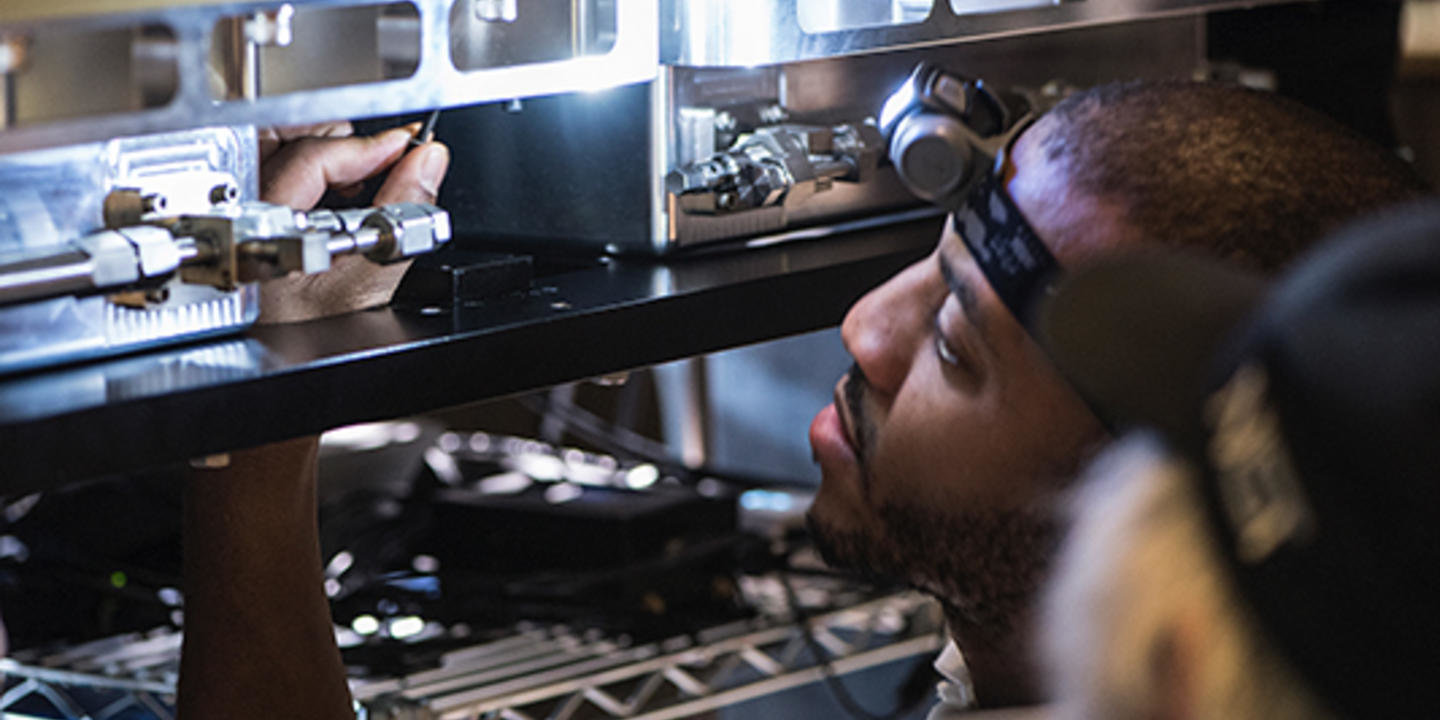 At the Smithsonian National Museum of African American History and Culture (NMAAHC) The Emancipation Proclamation and 13th Amendment to the Constitution are preserved in sealed encasements that were custom-designed, fabricated and outfitted with environmental sensors by the National Institute of Standards and Technology (NIST). Source: NIST In an effort to preserve two documents crucial to American History — the 13th Amendment to the Constitution and the Emancipation Proclamation — the National Institute of Standards and Technology (NIST) has outfitted the documents with environmental sensors ahead of being displayed this month at the Smithsonian National Museum of African American History and Culture (NMAAHC).
Fitted with an array of sensors, the sealed encasements were custom-designed by NIST to protect the documents from the elements.
"The system tracks pressure, temperature, relative humidity and oxygen content 24/7, and updates every 15 minutes," said NIST pressure and vacuum scientist Jacob Ricker, who is responsible for designing the sensors and monitoring system for the encasements.
"It's convenient to have continuously updated monitoring data stored on a cloud server and be able to plot the data over time," Ricker said. "If there's a serious change, the system will send an email to the museum so that they can take immediate action as appropriate. This saves significant staff time and makes it much simpler for the users."
Sitting beneath a two-pane laminated glass cover, the encasements are filled with argon (an inert gas) and 0.03 percent oxygen meant to keep the original document ink from changing color and/or deteriorating the paper.
Preparing for the installation, Ricker spent over a week at the museum.
"We have to do the testing of the encasements, test each seal and every flange with helium to check for leaks," he said. "After that, we put the document in and put the glass on it, and then flush the oxygen out of there by adding argon until the correct level is reached."
The NIST has created similar encasements before for the State of New York's exhibit of the Preliminary Emancipation Proclamation, the Constitution, Declaration of Independence, Bill of Rights and many other national treasures.
The documents are currently on display in the museum’s Slavery and Freedom gallery.


While very interesting, I would feel much better if the authentic emancipation proclamation were kept underground in a cobalt bomb proof structure.
A copy could be kept in the case ( who would really know the difference ? ) and everyone who came to the museum could view it.
Of course the case (s) would need to be constructed and people need to have jobs to make money and support their families.
So, in the future, if copy machines became obsolete, then they could put the real documents on display.