Group Proposes 'Atomic Fingerprinting' to Curb Counterfeiting
Jonathan Fuller | July 21, 2017 Image credit: Lancaster University
A research group based at Lancaster University, U.K., has proposed an anti-counterfeiting measure at the molecular level. The research was published online in ArXiv, a Cornell University open-access preprint journal.
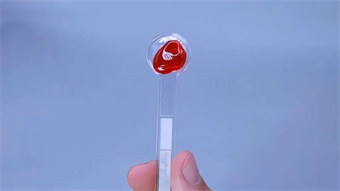
The method consists of a pattern of unique molecular imperfections and a corresponding smartphone app. The pattern is created by intentionally fabricating flaws—such as removing or adding atoms—into an atom-thin layer of material. The flawed material is incorporated into an ink and then printed onto a hologram that can be applied to any product.
A user then photographs the label with a smartphone. The phone’s flash excites the atoms, causing the hologram to produce a unique color based on its atomic flaws. A smartphone app instantly analyzes the image to confirm whether the label is authentic.
Study co-author Robert Young, physics professor at Lancaster University, and his team are working with a hologram-printing company to introduce their technology to the automotive industry. “We’re expecting the first products in market in the first quarter of next year, in 2018,” Young said.
Following automotive applications, Young said the researchers want to expand to the pharmaceutical industry, which loses $200 billion per year due to counterfeit drugs. "Thirty percent of counterfeit pharmaceuticals don't contain the correct active ingredient," Young says. "People buy these things, believe they're real, but they're not being treated for the disease. This is genuinely a really exciting application.”