Using Drones for Pipeline Inspections
June 07, 2017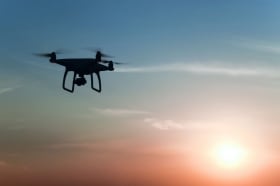 Scientists believe the use of drones would bring new efficiencies that would work especially well in remote or hard to reach areas. Image credit: University of AberdeenHoping to make the task of inspecting gas and oil pipelines for maintenance, security and safety issues more efficient, scientists at the University of Aberdeen believe employing aerial drones may benefit the industry.
Traditionally, these inspections are conducted on foot or by helicopter. However, because the inspections occur frequently and may sometimes include hard to reach or remote locales, the researchers believe that adding drones would streamline the process. Co-authors of the study, David R. Green and Cristina Gomez, have published their findings in the Arabian Journal of Geosciences.
Dr. Green said: "The main risk posed by an oil or gas pipeline is the existence of a spill or a leakage that threatens to cause an environmental disaster, not to mention the risk of an explosion.”
"A thorough system for pipeline monitoring requires the use of specific sensors that can detect rust or corrosion—or if the pipeline is beneath the ground, the existence of methane or changes in the surrounding vegetation that indicate a failure.”
"This kind of technology is evolving at a rapid pace, to the point where these sophisticated sensors are now small enough to mount on unmanned aerial vehicles."
"While specific rules would have to be developed to allow for the full development of this technology, our research makes clear that drones can play an important role in the inspection, monitoring and maintenance of oil and gas pipelines in the near future."