Modular Valve Simplifies Diagnostic Chip Fabrication
Engineering360 News Desk | January 30, 2017Rapid and cheap on-the-spot diagnoses for diseases such as tuberculosis and cancer may be a step closer thanks to a modular valve for microfluidic chips.
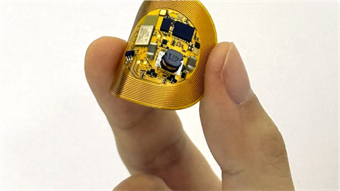
Swapping delicate microscopic flow valves for a universal modular valve system has enabled Singapore's Agency for Science, Technology and Research (A*STAR) researchers to decrease the cost and complexity of microfluidic diagnostic chips. These are business card-sized devices that can analyze blood on the spot for a range of disease biomarkers.
 Microfluidic device made by A*STAR scientists for on-the-spot blood analysis."Microfluidic chips are advancing point-of-care diagnosis for many diseases," says Alicia Toh from A*STAR's Singapore Institute of Manufacturing Technology (SIMTech). Inside these chips, microvalves direct microlitres of fluid through a series of microchannels for automated analysis. However, integrating microvalves into the microchannels is complex and susceptible to fabrication defects, which translates into a higher cost per device. In the medical diagnostic sector the race is on to lower the cost per diagnosis by producing cheaper microfluidic diagnostic chips, she says.
Toh and her colleagues addressed the problem by moving the microvalves off the main microfluidic chip, and created a modular valve that is fitted to the surface of the chip after fabrication. The valves consist of a microfluidic channel that connects to surface ports on the chip, and an air chamber that allows the channel to be pinched by increasing the air pressure. The team demonstrated that their modular valves could precisely manipulate chemical concentrations through fluidic routing, which is critical in many advance diagnostic applications.
Getting the valve design right was complicated. The team used software to predict the microscopic interactions between the flexible elastomeric silicone membrane and the fluid in the microchannel. Using materials that are compatible with the latest microfluidics technologies was also a constraint.
"The industry is rapidly moving toward more cost effective thermoplastic materials," says Toh. "By using compatible materials, we can achieve reliable integration without additional surface modification or adhesives."
Toh and her team are now exploring the production of microvalve modules using a variety of novel materials.