Method for Storing Vaccines at Room Temperature
John Simpson | December 28, 2016Several simple and inexpensive techniques could make it possible to store antiviral vaccines at room temperature for up to months at a time. The discovery, by Swiss Federal Institute of Technology, Lausanne researchers and partners could make a difference in locales where maintaining cold-chain transportation of vaccines is complicated and expensive.
Shipping vaccines in an unbroken temperature-controlled supply chain (a “cold chain”) all the way to recipients is a major logistical and financial challenge in remote areas and developing countries. According to Doctors Without Borders, the need to keep vaccines within a temperature range of 2-8°C is one of the main factors behind low immunization-coverage rates.
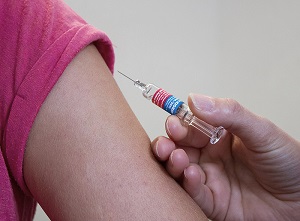 The research focused on viral-vector vaccines, the most common type, which normally last only a few days at room temperature. Image credit: Pixabay. Researchers at EPFL’s Supramolecular Nanomaterials and Interfaces Laboratory (SUNMIL), in collaboration with scientists in Milan, Turin, Leiden and Oregon, have come up with three vaccine additives to get overcome this challenge. In three separate experiments, using minute quantities of nanoparticles, an FDA-approved polymer (polyethylene glycol) and higher amounts of sucrose, they were able to stabilize vaccines at room temperature for several weeks and, in some cases, months. Their approach was successfully tested on a vaccine for rodents.
The research focused on viral-vector vaccines, the most common type of vaccine, which normally last for only a few days at room temperature. At that point, the viral components of the vaccines lose their structural integrity.
In their first approach, osmotic pressure was applied on the inactivated viruses (the main component of the vaccine) using a cloud of negatively charged nanoparticles. The virus was already subject to an outward osmotic pressure due to its genetic material (RNA or DNA), which has a high negative charge and is held inside the virus.
The nanoparticles formed a cloud of negatively charged objects that could not enter the virus, thus generating counter-osmotic pressure to keep the virus intact. With this method, infectivity for a virus reached a half-life of 20 days.
The second approach consisted of stiffening the virus’s capsid, which envelops the inactivated virus, by adding polymers. This additive stabilized the virus, slowing its oscillations by changing the capsid's stiffness. As a result, the vaccine remained fully intact for 20 days, with an estimated half-life of approximately 70 days.
Finally, adding sucrose, a common sugar, to the vaccine made the environment more viscous and slowed down fluctuations. With this third approach, 85% of the vaccine's properties were intact after 70 days.
Using these results, the researchers applied their methods to a vaccine that is currently in development. They were able to stabilize a vaccine against Chikungunya, a tropical virus, for 10 days and then successfully inoculated mice with it.
“The next step will be to run more extensive tests on specific vaccines, possibly combining the three different approaches,” says Francesco Stellacci, head of SUNMIL.