Vaccine Cooler Aims to Help Preserve Lives
Engineering360 News Desk | July 12, 2016Vaccines to combat disabling and deadly diseases can become useless if they are not stored at the proper temperature. The problem is particularly acute in parts of the world where more than 1 billion people live without access to electricity and refrigeration.
Scientists and engineers from the UK have developed a vaccine storage device, or cold box, which preserves vaccines for more than a month using ice and no external power source.
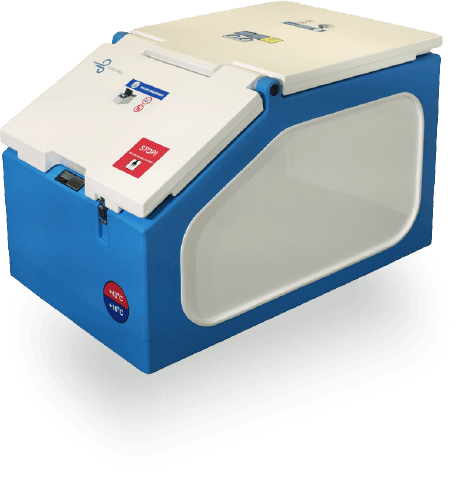 The long-term vaccine cooler requires no electricity and keeps vaccines cool for 35 days using about eight gallons of ice. Source: The Sure Chill Co. Ltd. Engineers from The Sure Chill Co. Ltd. conceived a way to use the company’s chilling technology to keep vaccines within their desired temperature range. They teamed with Harjit Singh of Brunel University London, an expert in vacuum insulating materials, to design the Sure Chill LTV cold box, which looks like a portable drinks cooler.
The long-term vaccine cooler requires no electricity and keeps vaccines cool for 35 days using 30 liters, or about eight gallons, of ice.
“The biggest challenge is to keep the vaccines in the very narrow safe storage temperature range of between two and eight degrees centigrade,” says Singh. The approach cocoons the vaccine chamber in water at 4°C, with vacuum insulation panels to keep the surrounding heat out. Singh says the panels are among the best solid insulation currently available and are more effective than conventional refrigeration materials.
The technology has no moving parts and works on the principle that water is at its densest at 4°C. The ice packs work as a cold battery with convection currents in the water keeping the vaccine cold while avoiding direct contact with the ice.
The chamber never comes into contact with the ice, meaning the problem of freezing is avoided. Freezing can be a chronic problem in the transportation and long-term storage of vaccines, as it’s estimated that over half of vaccines administered in the developing world have been exposed to freezing temperatures at some point, reducing their efficacy.
The Sure Chill vaccine cold box is undergoing trials in Senegal and the company hopes to begin production by the end of 2016.