
Is Helium-4 a Harbinger of Seismic Activity?
Engineering360 News Desk | December 01, 2016A possible correlation between concentration changes of the helium-4 isotope in groundwater and the amount of stress exerted on inner rock layers of the earth is reported by University of Tokyo researchers.
The relationship may lead to the development of a monitoring system that catches stress changes that could foreshadow a big earthquake.
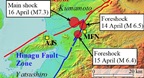 Site of the April 2016 quake. Credit:of Yuji Sano However, additional data are needed to link the occurrence of earthquakes to such chemical changes before establishing a strong correlation between the two.
The researchers found that when stress exerted on the earth’s crust was high, the levels of helium-4 released in groundwater increased at sites near the epicenter of the April 2016 Kumamoto earthquake, a magnitude 7.3 quake in southwestern Japan.
A submersible pump was used in deep wells to obtain groundwater samples at depths of 280 to 1,300 meters from seven locations in the fault zones surrounding the epicenter 11 days after the event. Researchers compared the helium-4 levels derived from chemical analyses of these samples with those of identical analyses performed in 2010. Helium-4 levels were shown to have increased in samples collected near the epicenter due to the gas released by the rock fractures.
A positive correlation was demonstrated between helium amounts in groundwater and strain change. Helium content was higher in areas near the epicenter, and concentrations fell further away from the most intense seismic activity.



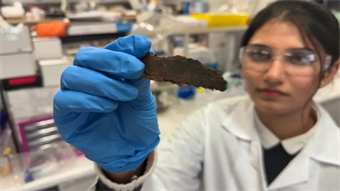
"to obtain groundwater samples at depths of 280 to 1,300 meters from seven locations in the fault zones surrounding the epicenter 11 days after the event"
Eleven days after the event? There is no shortage of indicators that such an event just happened.
Continuous sampling compared with seismic activity of the same period would be better.
In reply to #1
Yeah, but cant you see the real issue? How on Earth would that Helium content change?
Why would it change with more stress or why would more of it release?
I throw something out here: Maybe the helium is the reason for more stress?
How do we know?
Continuous measurement of course!
Why did they test the water in the first place? This is for me the bonus question.
In reply to #2
Why would it change with more stress? Stress probably releases it from the rocks more rapidly. Helium builds up in rocks that have uranium or thorium....anything that alpha decays. Alphas are helium nuclei.
In reply to #3
Exactly what the article said: "Helium-4 levels were shown to have increased in samples collected near the epicenter due to the gas released by the rock fractures."
In reply to #4
The article does miss the salient point of helium building up over time from alpha decays.
It also fails to establish how such an indicator might be a 'harbinger' as it seems like it would mostly occur during a seismic event, not prior.
In reply to #5
The article also does not say why they were measuring that exact Helium content. Hence my question is why would they measure it and are they assuming that the process of creating that Helium is part of the stress creation.
If this is the case helium could be the "harbinger" if not it would rather be sign that stress was released through fractures.
Or there is another indication that fractures open up before the stress release and the Helium content indicates this process.
In reply to #6
They could have just as easily measured/said 'helium' instead of helium-4. Helium-3 is in such low concentrations, I seriously doubt there was differentiation of the isotopes.
Helium 4 is what is produced in alpha decays. And it makes sense that over time helium (as helium 4) would build up in rocks, and that stress could release it. I don't know enough about earthquakes to know if significant strain occur just prior to major quakes.....which would likely be required if helium levels have any possibility for helping to predict major quakes instead of merely confirm.