Low-Cost Diagnostic Sensor for Cystic Fibrosis
John Simpson | September 30, 2016Penn State biomaterials scientists have developed a fluorescent sensor, a way of detecting salt concentrations in sweat or other bodily fluids. Derived from citric acid molecules, it is highly sensitive and highly selective for chloride, the key diagnostic marker in cystic fibrosis.
"Salt concentrations can be important for many health-related conditions," says Jian Yang, professor of biomedical engineering. "Our method uses fluorescent molecules based on citrate, a natural molecule that is essential for bone health."
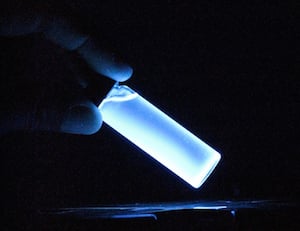 Naturally fluorescing polymer nanoparticles can be used to detect a key marker of cystic fibrosis. Image credit: Yang Lab/Penn State. Compared to other methods used for chloride detection, the citrate-based fluorescent material is more sensitive to chloride and is able to detect it over a wider range of concentrations, Yang says. The material is also sensitive to bromide, another salt that can interfere with the results of traditional clinical laboratory tests.
Even trace amounts of bromide can throw off test results. With the citrate-based sensor, Yang's group can distinguish between chloride and bromide. The group is also working to establish a potential new standard for bromide detection in diagnosis of the disease.
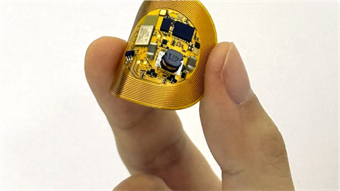
Yang is collaborating with Penn State Electrical Engineer Professor Zhiwen Liu to build a handheld device that can measure salt concentrations in sweat using the citrate-based molecules and a cell phone. This could be especially useful in developing countries where people have limited access to expensive analytical equipment.
"We are developing a platform material for sensing that is low cost, can be automated, requires no titration by trained staff or expensive instrumentation as in hospitals—and provides fast, almost instantaneous, results," says Liu.