From roadmap to rack: What engineers must solve to make 800 VDC practical
September 17, 2026AI data centers are concentrating more graphics processing units (GPUs) and more power into individual racks to improve computing performance and reduce chip-to-chip communication delays. That consolidation is pushing rack densities from the tens of kilowatts toward several hundred kilowatts and, eventually, past 1 MW.
Conventional rack power and cooling architectures encounter practical limits well below the highest AI rack densities, often in the tens of kilowatts per rack for air-cooled designs. The latest 48 VDC busbar architectures improve in-rack power delivery and support higher-density systems. As rack loads move into hundreds of kilowatts, the required current drives larger busbars, conductors, connectors, power shelves and thermal infrastructure. The practical limitation of air cooling is one reason the industry is moving to ±400 VDC and 800 VDC architectures for future high-density and megawatt-class AI racks.
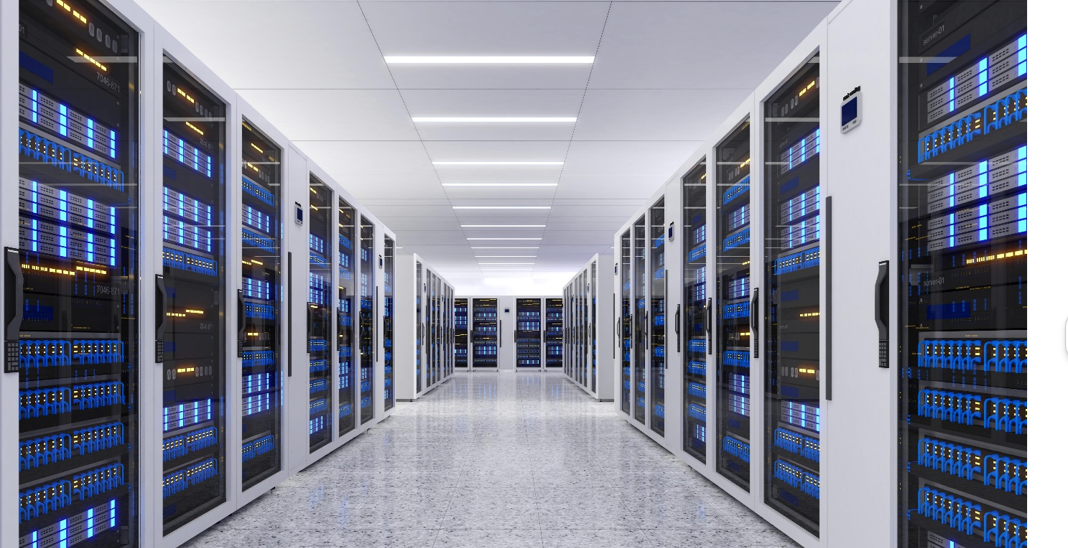 Figure 1: Rack-level power racks, or "sidecars," are becoming the most practical near-term bridge between today’s AC facilities and the DC data centers of the future. Source: Anderson Power
There is broad agreement among design engineers that 800 VDC is the de facto standard for the near future. Agreement on the voltage, however, is developing faster than agreement on the architecture. A great deal remains to be aligned among component manufacturers, regulatory agencies, the Open Compute Project and DC power groups before wide implementation is possible. Meanwhile, the commercial pressure is unambiguous: engineers need more power at the rack, delivered through connectors, busbars and whips rated for 800 VDC that operate safely.
The next phase of adoption will be shaped by decisions about where conversion from AC occurs, how systems are grounded and protected, where energy storage sits, how equipment is maintained, and which connector designs can safely support emerging architectures. Rack-level power racks, or "sidecars," are becoming the most practical near-term bridge between today’s AC facilities and the DC data centers of the future.
Why 800 VDC is becoming the leading option
Traditional data centers may convert electricity several times as it moves from the utility supply to the processors. Each power conversion stage adds equipment, heat, space and energy loss.
800 VDC is gaining support because it meaningfully reduces current while remaining within the technical low-voltage direct current, or LVDC, category, which extends to 1,500 VDC. It bears stressing that "low voltage" is a standards classification, not an indication that 800 VDC presents low safety risk.
Electrical power is determined by voltage and current. Raising voltage allows the same amount of power to be delivered with less current. Lower current also means less cable heating and therefore less cooling. Thinner conductors free up space to allow for shorter distances between chips, enabling the rack densification that delivers faster in-rack networking.
The industry is now focused on implementing 800 VDC at the rack level, as a practical start to LVDC in the data center. Facility-wide 800 VDC architectures will require more planning, standards and cooperation.
Multiple implementation approaches are emerging, each with different tradeoffs. Simply put, 800 VDC is a range of hardware options and not a prescribed fixed architecture.
An 800 VDC design can vary based on:
- Where AC is converted to 800 VDC
- Whether the DC supply is isolated
- How the system is grounded
- Whether it uses a differential +800 VDC or bipolar ±400 VDC arrangement
- Where batteries and capacitors are located
- How redundancy and concurrent maintenance are provided
- How much of the existing AC infrastructure is retained
Currently, two primary implementation approaches are being evaluated.
· Differential +800 VDC: A two-wire arrangement supplies the full 800 VDC difference between the conductors. It can simplify cabling and protection but may require insulation and clearances designed for the full voltage, depending on the grounding approach.
· Bipolar ±400 VDC: A three-wire arrangement that uses positive 400 VDC, -400 VDC and a midpoint conductor. It can supply both 400 VDC and 800 VDC loads but adds a current-carrying conductor in an environment where space is already limited.
Both approaches remain under consideration, and the industry has not selected a universal configuration. Data center system builders have their own preferences, and national regulators will impose local installation rules. Furthermore, hyperscalers operating in the same state are already choosing different wiring schemes. Which architecture gains traction will depend on those factors more than on a single technical verdict.
These decisions matter because architecture selection determines connector pole count and configuration, insulation requirements, circuit protection and ground-fault behavior, and carries downstream into equipment interoperability, maintenance procedures and future expansion.
That uncertainty argues for flexibility over early commitment. Some power connectors can be wired to support several high voltage schemes, letting engineers defer architectural lock-in while the industry converges. For example, Anderson Power’s Saf-D-Grid Three Phase Connector is engineered for 480 VAC three-phase power distribution, and additional connectors to support 800 VDC are under development.
The power rack, or sidecar, is emerging as the practical first step.
Recent Schneider Electric and NVIDIA research identifies rack-level power racks, or sidecars, as the most feasible near-term bridge to 800 VDC. This is the approach Anderson Power recommends to engineers as the most practical approach to implementation.
A power rack is a dedicated cabinet located next to the IT rack and can contain AC-to-800 VDC conversion equipment, circuit protection, controls and monitoring, capacitors or batteries and connections supplying the adjacent compute rack(s).
This approach introduces the smallest change relative to current AC data centers because much of the established upstream infrastructure can be retained. One popular approach to spreading 800 VDC through a facility is to work back from the power rack back toward the grid rather than attempting a facility-wide conversion first.
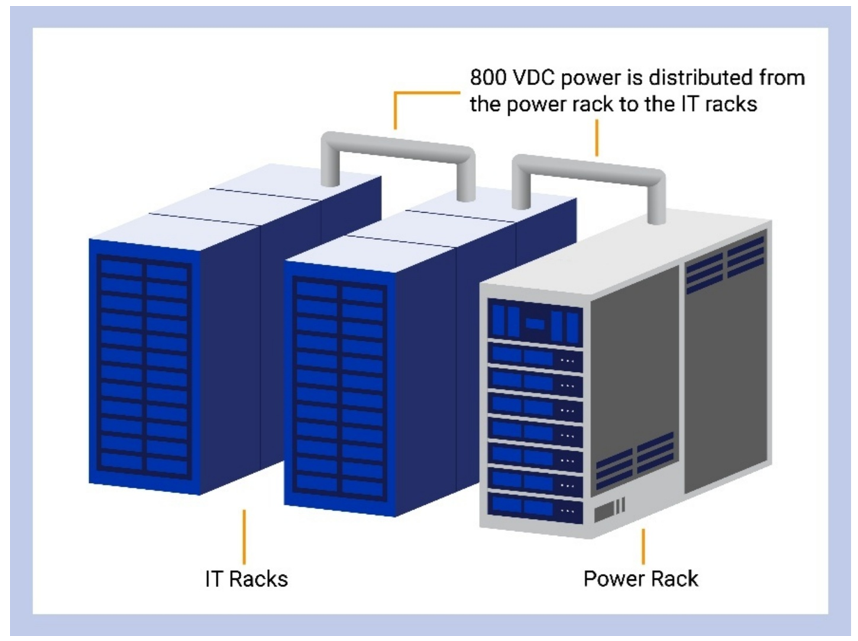 Figure 2: 800 V DC power architectures move the power handling equipment that converts AC to DC from the IT rack into the power rack. Source: Anderson Power
The power rack approach offers several near-term advantages.
- It minimizes disruption to familiar AC switchgear, protection and operating practices.
- It benefits from components and manufacturing experience developed in adjacent markets, particularly electric vehicles.
- It limits many potential early-stage failures to a single rack rather than an entire pod or data hall.
- It allows power racks to be tested and commissioned as repeatable units.
- It provides a manageable way for engineers to gain experience with 800 VDC systems.
- It moves power conversion out of the IT rack and raises distribution voltage, reducing copper and congestion while freeing valuable rack space.
The power rack is a well-defined, contained starting point, and it should not be dismissed as purely transitional. Power racks can serve as both a stepping stone for hyperscale AI factories and a longer-term solution for enterprise data centers. Additionally, a single power rack can support more than one IT rack, which enables data centers to maintain consistent implementation. Localized power racks are the immediate path, with conversion migrating from beside the rack to then serve a pod of racks.
More centralized systems could eventually reduce power-equipment footprint and improve integration, but they create larger fault domains and demand more mature protection, interoperability and maintenance practices. They also change component requirements: conversion farther upstream needs connectors rated for considerably larger currents than those at the rack.
But note, before power racks become repeatable products rather than custom-engineered systems, their protection, grounding, fault behavior, capacitor fault currents and energy storage placement must be engineered end-to-end as one coordinated system.
Safety and LVDC: Why higher voltage requires new protection and service practices
Although 800 VDC falls within the technical definition of low-voltage direct current (LVDC), it presents significantly different safety and service considerations than the lower-voltage architectures traditionally used inside racks. As higher-voltage DC moves closer to IT equipment and service personnel, designers must account for the following:
- Electric shock: Higher voltage can drive dangerous current through the body. Components must prevent workers from touching energized conductors during normal use and foreseeable service activities.
- Arc flash and sustained arcs: One of the most prominent safety concerns today, an arc can form when current jumps across a gap, including when a connector is separated while energized. At these power levels, that event can injure personnel, ignite surrounding materials and damage costly infrastructure.
- Stored energy: Batteries and capacitors used for backup and AI load smoothing may continue feeding a fault even after the normal upstream source has been interrupted. Protection must account for all possible energy sources.
- Fault containment and selectivity: The protective device nearest a fault should interrupt it without taking down unrelated racks, an objective known as selective coordination.
- Maintenance practices: Facilities may need new procedures, training, PPE, lockout/tagout practices and clearer divisions of responsibility between IT personnel and electrical facilities teams. The Schneider paper stresses that current operating practices for lower-voltage AC racks do not transfer directly to higher-voltage DC systems.
Translating those hazards into requirements means preventing access to energized contacts and accidental disconnection under load, interrupting power before the main contacts separate, limiting fault energy and isolating only the affected equipment. Wire size selection and documented lockout/tagout procedures belong in the same conversation.
Two other less-discussed issues also deserve consideration.
· The first is thermal management. Even where liquid cooling is applied to critical CPUs, TPUs and GPUs, the remaining server components still require air cooling as that space will still be very hot. This means connectors and cabling need ratings for increasingly higher temperatures. NVIDIA has introduced a warm-water cooling standard for high-density AI racks with a 45° C (113° F) inlet temperature, and greater power consumption means more heat to dissipate. A few manufacturers like Anderson Power offer components rated to 105° C, which provides engineers with extra thermal headroom compared to standard IEC connectors that typically are rated up to 70° C.
· The second is grid interaction. The dramatic workload swings characteristic of AI training change the load the utility sees, and those swings can cause disturbances on the grid. Managing them automatically is one hazard the industry is currently struggling to understand.
Higher-voltage DC is moving closer to personnel who have not traditionally worked around this class of hazard, so facilities may need specialized training, revised lockout/tagout procedures, updated PPE requirements, clearly defined responsibilities between IT and facilities teams, and validated processes for replacing or servicing equipment.
Successful deployment of 800 VDC will depend on operational and workforce readiness as much as on technical design.
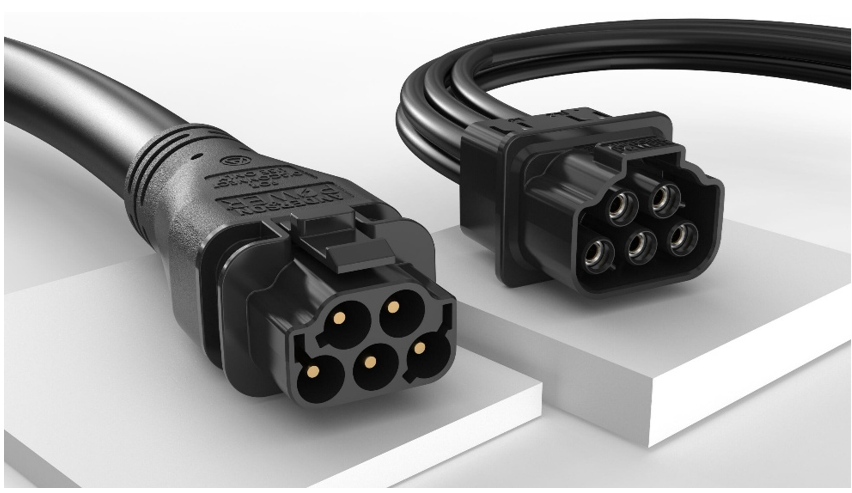 Figure 3: The Saf-D-Grid Three Phase connector from Anderson Power is an example of a high-power connector engineered for 480 VAC three-phase distribution. Additional connectors are under development to support higher voltages, including 800 VDC. Source: Anderson Power
How emerging architectures change connector requirements
At 800 VDC, a connector becomes part of the power system’s protection, control and maintenance strategy, and should be designed accordingly.
A few considerations include:
- Voltage and current rating: The connector must carry the required load without overheating or insulation breakdown.
- Touch-safe construction: Energized contacts should not be accessible to fingers or tools during normal handling.
- Creepage and clearance: Sufficient distance must be maintained along insulating surfaces and through air to prevent electricity from crossing between contacts.
- Secure latching: The connection must resist accidental separation.
- Interlocking: A signal or mechanical sequence can tell the system to remove power before the main power contacts separate.
- Mate-last/break-first signaling: Smaller signal contacts engage after the power connection is secure and disengage before the main contacts separate, allowing the control system to interrupt power first.
- Temperature monitoring: Although it’s a commonly overlooked element, monitoring near the contacts may help identify abnormal resistance. Overheating is a contributing factor that can lead to an arc flash.
- Liquid-cooling compatibility: Connector housings, seals, insulation, metal contacts and cable jacket materials and labels may need to tolerate cooling fluids without degrading or contaminating the fluid.
- Serviceability: Safety features must work within real maintenance procedures, not only laboratory conditions, which means standard operating procedures must be written with the higher voltage hardware in mind.
Because no commercially available connector yet meets every one of these requirements at 800 VDC, this is the moment to ask connector manufacturers what touch-safe geometry, interlock behavior and temperature sensing are being designed in, and on what evidence. Companies like Anderson Power are already developing solutions combining touch-safe construction with secure latching, interlocking and temperature monitoring.
Standards are developing, but implementation cannot wait
Existing product standards cover aspects of higher-voltage DC equipment, but data-center-specific architectures, connector interfaces, operational procedures and DC arc-flash calculation methods remain less mature than their AC equivalents. Product development and deployment demand are moving faster than formal harmonization.
Because waiting to implement 800 VDC is not an option, engineers should evaluate the following until experience, standards and component availability produce greater alignment.
- Whether components have actually been tested and certified for the intended DC voltage and current
- Regional differences among UL, IEC and local code requirements
- Interoperability across vendors
- Shock protection coordination across the complete system
- Workforce training and qualified service support
- Whether the LVDC architecture can be safely expanded later
- How evolving standards may affect equipment selected today
Over the next 12 to 24 months, the clearest signal of a maturing market will be the availability of 800 VDC connectors genuinely suitable for data center deployment.
Looking ahead
800 VDC is gaining momentum because the physical limits of current rack-power systems are becoming apparent. But the transition will not happen through one universal architecture or an immediate move to facility-wide DC distribution. Instead, it will be phased, starting with the adoption of rack-level power conversion.
The shift to 800 VDC will be measured not only by how efficiently data centers can move power to megawatt-scale racks, but by how safely and efficiently those systems can be installed, operated and serviced throughout their lifetime.
As the industry works toward more defined architectures, connector manufacturers are developing approaches to support safer connection and disconnection at higher DC voltages. Anderson Power, a manufacturer with nearly 150 years of electrical experience, is actively evaluating these requirements and developing solutions built around safe, reliable power delivery.