Implementing HALT and HASS for robust product design and production control
October 19, 2026Ensuring product reliability has become increasingly challenging as modern products grow more complex and development cycles continue to compress. Traditional qualification and life testing methods often fail to uncover latent design and manufacturing weaknesses that later surface as field failures, warranty claims or costly recalls. Highly accelerated life testing (HALT) and highly accelerated stress screening (HASS) provide a structured, data-driven approach to identifying and mitigating these risks early in the product lifecycle.
HALT is a design-focused methodology that intentionally drives products beyond their operating limits to expose weaknesses and better understand design margins. HASS builds on this foundation by applying controlled stress screens in production to detect manufacturing defects, process changes and variability before products reach customers. When properly implemented together, HALT and HASS form a closed-loop reliability strategy that accelerates design maturity, reduces infant mortality failures and lowers total lifecycle cost. HALT and HASS function individually and as an integrated reliability program that engineering and manufacturing teams can implement as an integral part of their production process.
 Figure 1. HALT and HASS provide a structured, data-driven approach to identifying and mitigating risks early in the product lifecycle. Source: littlewolf1989/Adobe Stock
Reliability: The challenge in modern product development
Modern products are increasingly characterized by higher functional density, tighter tolerances and greater reliance on complex electronic and electromechanical systems. At the same time, organizations face strong pressure to shorten development timelines and reduce costs. These competing demands often limit the depth and duration of traditional reliability testing, increasing the likelihood that design weaknesses remain undiscovered until after product launch.
Conventional environmental qualification tests are typically performed at defined conditions intended to demonstrate compliance with specified requirements. While valuable for qualification, these tests are generally not designed to push products far beyond their operating envelope to intentionally uncover hidden failure modes or insufficient design margins. As a result, many failures occur early in the field, where they are significantly more expensive to diagnose and correct.
Infant mortality failures occur early in a product's life and are often associated with issues such as marginal components, workmanship defects or manufacturing variation. These early failures can drive warranty costs and damage product reputation, particularly when weaknesses escape standard functional testing. Addressing these challenges requires test methodologies that actively seek out weaknesses and defects rather than simply confirming nominal performance.
HALT and HASS methodologies
HALT and HASS are complementary reliability tools designed to uncover and control failure mechanisms throughout the product lifecycle. While they share common stress techniques, their objectives and applications differ significantly.
HALT is a design screen used during product development. Its purpose is not to verify compliance with specifications, but to rapidly identify design weaknesses by applying incrementally increasing levels of thermal stress, vibration and combined environments. Products are intentionally pushed beyond their normal operating limits until failures occur. These failures provide critical insight into design margins, component limitations and system interactions.
HASS, by contrast, is a production screen. It is applied to fully assembled products to detect manufacturing defects, process drift or component changes that could lead to reliability issues in the field. Unlike HALT, HASS uses defined pass/fail criteria, with stress levels informed by the limits and product behavior identified through HALT. In simple terms, HALT uncovers weaknesses and establishes design understanding; HASS uses that knowledge to help detect defects and changes introduced during production.
HALT: Finding failures to improve design robustness
The primary objective of HALT is to identify weaknesses and failure modes early enough in the design process to address them before qualification and production, ultimately resulting in a more robust product. HALT is performed early in development, before formal validation and reliability testing, and is intended to complement rather than replace those activities.
HALT is conducted using an incremental approach in which thermal and vibration stresses are gradually increased beyond expected operating conditions. Testing typically begins at ambient conditions and progresses through low- and high-temperature steps, vibration steps and combined stress profiles.
As stress levels increase, products are continuously monitored for functional degradation or failure. The point at which performance begins to degrade defines the operational limit, while catastrophic failure establishes the destruct limit. These limits provide valuable insight into true design margin and often reveal weaknesses that would not be detected through standard qualification testing.
Failures encountered during HALT are not considered test failures in the traditional sense. Instead, they are opportunities for improvement. Each failure is analyzed to determine root cause, whether related to component selection, mechanical design, thermal management, assembly practices or system interactions. Corrective actions are implemented, and the product is retested to confirm improved robustness. This iterative process of finding, understanding, correcting and retesting weaknesses is central to HALT and allows product robustness to improve throughout development.
 Figure 2. Failure modes and effects analysis. Source: Arif/Adobe Stock
HALT results should feed directly into updated design documentation, including failure modes and effects analysis (FMEA). By capturing failure mechanisms and corrective actions, organizations build a knowledge base that strengthens future designs and reduces the likelihood of recurring issues.
Translating HALT data into an effective HASS program
HALT data forms the foundation of any effective HASS program. Without a clear understanding of a product’s operational and destruct limits, production screening can either be ineffective or inadvertently damaging. HASS stress levels must be carefully selected to remain below destruct limits while exceeding normal operating conditions.
Some of the key inputs derived from HALT include:
- Thermal and vibration limits
- Product response characteristics
- Key performance indicators
- Known failure modes
These inputs guide the development of HASS profiles that are aggressive enough to precipitate latent defects without causing wear-out or new failure mechanisms.
HALT-identified weaknesses should be evaluated and appropriately addressed before transitioning to production screening. Carrying known, unresolved design weaknesses into production can lead to recurring failures during HASS or, ultimately, in the field. Corrective actions identified through HALT should be implemented and verified so that HASS can focus on its intended purpose: detecting manufacturing defects and process variations rather than repeatedly exposing unresolved design issues. When properly executed, this transition ensures that HASS functions as a true screening process rather than an extension of development testing.
Understanding the HASS screening process
An effective HASS process incorporates two key functions: precipitation and detection.
During precipitation, products are subjected to stresses beyond their identified operational limits but below their destruct limits. The product is not operated or functionally tested during this stage; rather, the objective is to force latent manufacturing defects to become hard failures. These stresses may include rapid thermal cycling, vibration or a combination of both.
During detection, the product is operated and functionally monitored at lower stress levels to identify failures created during the precipitation phase, as well as operational failures induced by the detection-stage stresses. Defined pass/fail criteria provide a consistent basis for screening decisions.
HASS is particularly effective at detecting changes in manufacturing processes, such as component substitutions, assembly variations or supplier changes. By applying a stress profile informed by HALT results and validated for production screening, HASS helps identify defects and process variations that could otherwise contribute to early-life failures in the field.
Fixturing and practical implementation considerations
Fixturing plays a critical role in both HALT and HASS effectiveness. During HALT, fixturing should be designed to maximize vibration and shock transmission to the product while allowing it to experience the fastest practical thermal transitions. Replicating typical field orientation or mounting is not the objective; the test setup should instead be designed to effectively stimulate and stress the product.
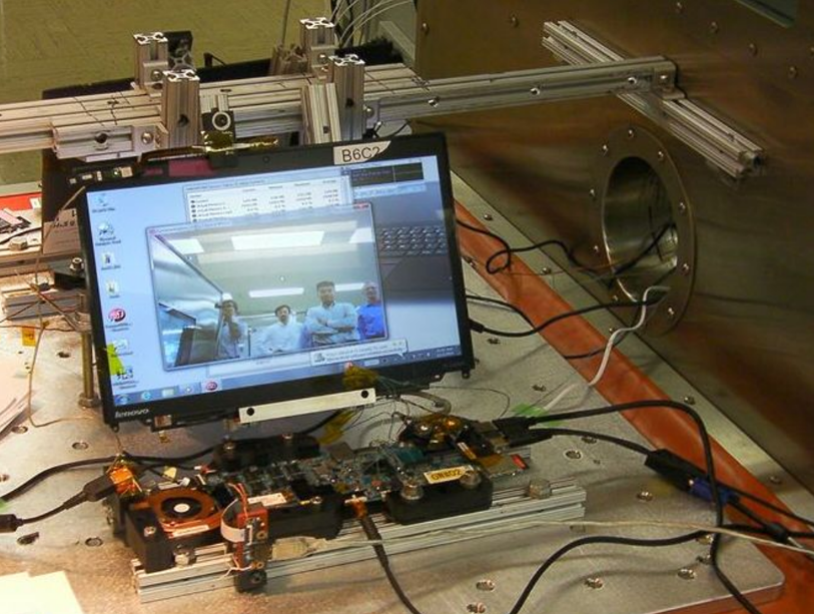 Figure 3. Products with specific subassemblies or components that cannot tolerate the stresses of the chamber can require specialized isolation techniques during testing. Source: ESPEC NA Solutions Group
Validation of the HASS fixture is an essential step in HASS implementation. During fixture validation, instrumented products are placed in each product location to confirm that units experience similar and sufficient thermal and vibration stresses across fixture locations and from run to run. This validation helps ensure that the production screen is repeatable and that results are not influenced by a product's position within the fixture.
HASS and HASA in production
HASS is typically applied as a production screen, while highly accelerated stress audit (HASA) uses the established HASS profile to screen a statistically representative sample of products rather than every unit. HASA can provide an ongoing audit of production quality and help identify changes or process variations that could affect product reliability.
The decision to implement HASS or HASA should be driven by the product, manufacturing process and available data, including screening results, process stability and field performance. The goal is to apply an appropriate screening strategy that provides meaningful feedback on manufacturing quality and product reliability.
Proof of screen: Validating the HASS process
Proof of screen is a critical part of HASS implementation and has two primary objectives: demonstrating that the screen is effective at finding defects and demonstrating that it does not significantly reduce the life of the product.
To evaluate screen safety, multiple product samples are subjected to the proposed HASS screen repeatedly, typically 20 to 50 times. These repeated cycles should not result in end-of-life failure modes, providing evidence that the screen is not consuming an unacceptable portion of the product's useful life.
Screen effectiveness is evaluated using products with known or seeded defects. These units are run through the proposed screen and are expected to fail, demonstrating that the screen can reliably precipitate and detect the types of defects it is intended to identify. Together, these evaluations establish that the HASS screen is both effective and appropriate for production use.
Integrating HALT and HASS into a continuous improvement loop
HALT and HASS are most effective when integrated into a continuous improvement framework. Findings from HALT, HASS and HASA, along with failures or performance issues observed in the field, should feed back into design reviews, manufacturing process improvements and updated FMEA documentation.
This feedback loop enables organizations to systematically strengthen product designs and manufacturing processes, reduce field failures and warranty costs, and improve customer satisfaction over time. By treating failures as valuable data rather than setbacks, engineering and manufacturing teams can use what they learn to continuously improve product robustness and process control.
Building reliability into design and production
HALT and HASS provide complementary methodologies for improving product reliability across the design and manufacturing lifecycle. HALT exposes weaknesses early enough in development to understand, correct and verify them before production, ultimately resulting in a more robust product. HASS builds on that understanding with a production screen designed to identify manufacturing defects and process variations before affected products reach the field.
When implemented as part of a broader reliability strategy, HALT and HASS can help reduce reliability risk, accelerate product maturity and lower the costs associated with failures discovered later in the product lifecycle. More importantly, they create a continuous flow of information between design, manufacturing and field performance, helping organizations make better-informed decisions and build more robust products over time.
ESPEC works with engineering teams to develop and implement HALT and HASS strategies based on their products, reliability objectives and manufacturing requirements.
Contact the experts at ESPEC to learn how testing processes can be perfected through HALT and HASS.
Additional resources: