New microneedle tech promises painless glucose tracking
Marie Donlon | March 02, 2026Researchers from Washington State University have developed a wearable biosensor that promises to improve wireless glucose monitoring for people with diabetes.
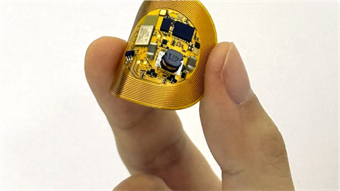
According to its developers, the device, which combines microneedles with integrated sensors to monitor glucose levels in interstitial fluid, offers a potential alternative to current continuous glucose monitoring technologies.
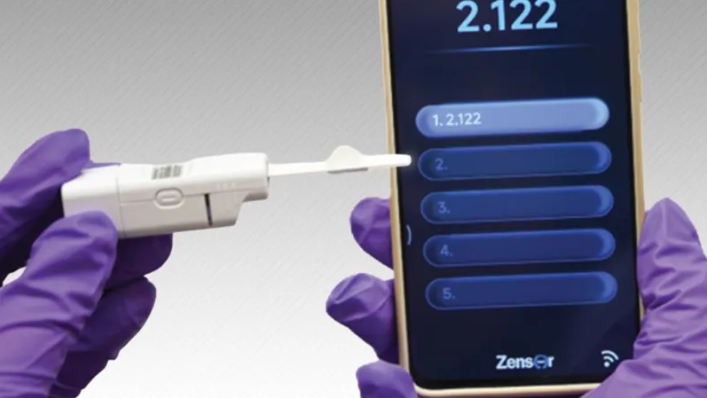 Source: Chuchu Chen and Yonghao Fu
Using this less invasive approach, the team found that the device could accurately detect sugar levels and wirelessly transmit information to a smartphone in real time.
“We were able to amplify the signal through our new single-atom catalyst and make sensors that are smaller, smarter, and more sensitive,” the team explained. “This is the future and provides a foundation for being able to detect other disease biomarkers in the body.”
While current iterations of continuous glucose monitors employ small needles to insert the monitor, which tend to cause skin irritation or rashes from the chemical processes that occur under the skin, the 3D-printed sensor uses a button-activated pump and hollow microneedles to extract fluid from around the cells and tissue below the skin for testing. Because this testing process takes place outside the body, the potential toxicity for patients is reduced. Further, because the device relies on hollow, minimally invasive microneedles, the process is virtually painless.
Additionally, the new glucose monitor achieves high sensitivity by using a single-atom catalyst and nanozymes — nanomaterials with enzyme-like properties — to amplify the glucose signal, thus enabling detection of very low biomarker levels.
An article detailing the new glucose monitor, “3D-printed hollow microneedle-based electrochemical sensor for wireless glucose monitoring,” appears in the journal Analyst.