Team makes food packaging from fish skin biofilm
Marie Donlon | February 20, 2026A new fish-derived biofilm designed for use in food packaging applications has been developed by a team of researchers from the University of São Paulo (USP) and EMBRAPA Pecuária Sudeste.
To develop this biofilm, the team used the skin of an Amazonian fish called tambatinga — which is the result of crossbreeding the female tambaqui (Colossoma macropomum) and the male pirapitinga (Piaractus brachypomus) — as the raw material.
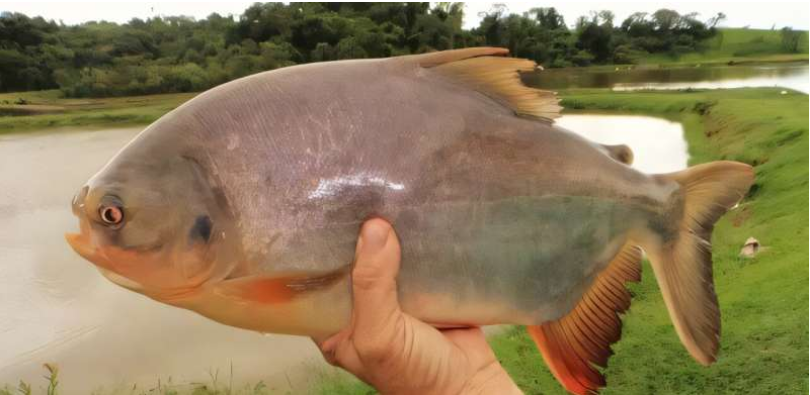 Tambatinga is the result of crossing tambaqui with pirapitinga. Source: Fábio Rosa Sussel
The team selected the tambatinga for its reported excellent growth performance as well as for its reputation as a valuable and sustainable source of collagen-rich material. Likewise, because of its tropical origin, this fish species skin tends to feature higher levels of amino acids, which boosts the functional and structural properties of the gelatin sourced from it.
In the lab, the team used the fish to create biodegradable polymers that could potentially replace — at least partially — the thin, flexible films commonly used in food packaging that are manufactured using synthetic materials like petroleum.
"We've been working for over 25 years on the development of films based on biopolymers, such as proteins and polysaccharides, with the aim of applying this material to food packaging and reducing the environmental impact, since there are many problems associated with the accumulation of synthetic packaging in nature," the researchers explained.
The first step in accomplishing this, the team noted, involved cleaning the fish skins and subjecting them to a gelatin extraction process that uses a combination of hot water and acetic acid to remove impurities. The next step involved making films from the material, using 2 g of gelatin for every 100 g of film-forming solution. These steps resulted in a transparent, flexible material with uniform surfaces.
Additional trials of the material revealed that it was highly resistant and capable of blocking ultraviolet rays more effectively and demonstrated lower water vapor permeability than other gelatin-based materials.
However, the team has cautioned that the material has one limitation: sensitivity to moisture. As such, the team explained that for now, the film can only be used in dehydrated products, such as nuts and chestnuts.
Beyond using the tambatinga skin in food packaging, the team believe that the material could also one day be used in the making of pharmaceuticals and biomedical products.
An article detailing the material, “Sustainable Biopolymer Films from Amazonian Tambatinga Fish Waste: Gelatin Extraction and Performance for Food Packaging Applications,” appears in the journal Foods.