New 10-minute paper test spots 'devil's breath' in drinks
Marie Donlon | October 28, 2026A research team at the University of the Basque Country (EHU) in Spain developed a microfluidic paper-based device for rapidly detecting scopolamine in pharmaceuticals, plant extracts and beverages. Also known as Devil's Breath, scopolamine is a potent drug with amnesic, sedative and hallucinogenic effects, and it can pose serious safety risks when used for nefarious reasons.
The team explained that the compound has no color, odor or taste, meaning it goes undetected by possible victims when ingested. Lab-based analytical methods can readily identify scopolamine, but the specialized equipment and required sample preparation makes this impractical in common locations where a bad actor may seek targets, such as a bar or restaurant.
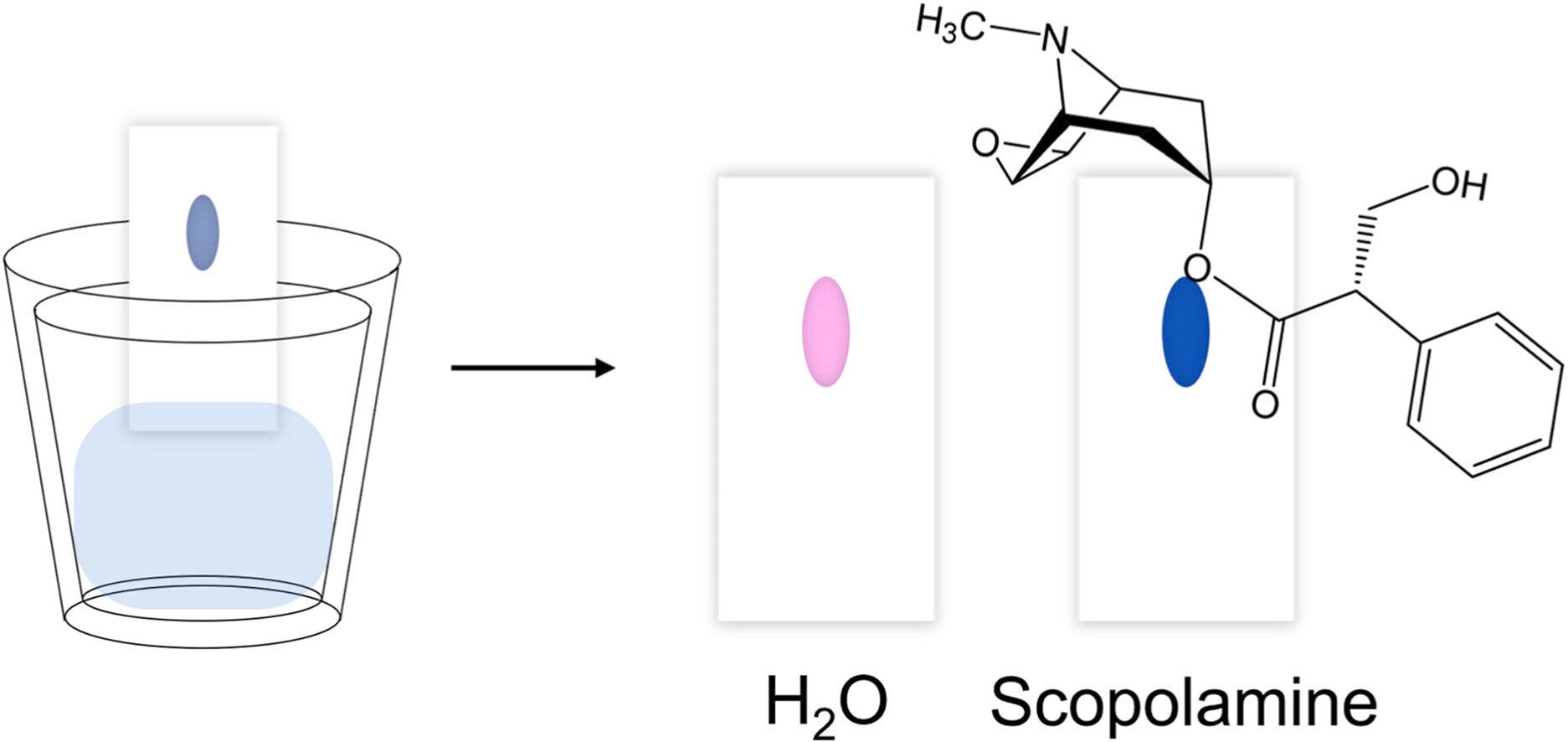 Source: Talanta (2027). DOI: 10.1016/j.talanta.2026.130319
The portable device uses a self-powered microfluidic system, built on a paper support, to provide a simple visual indication of scopolamine. It relies on a colorimetric reaction in which cobalt(II) thiocyanate reacts with scopolamine under acidic conditions, producing a visible color change from pink to blue.
After the device is submerged in a sample, such as a beverage, the result can be seen with the naked eye in about 10 minutes. The researchers validated the device in a range of alcoholic and nonalcoholic beverages, with a detection limit of 0.13 mg/ml for pure scopolamine.
The device could eventually enable rapid, on-site screening of beverages for scopolamine, without sending samples to a lab, potentially helping prevent drug-facilitated assaults.
The team detailed its work in the article, “A microfluidic paper-based device for on-site colorimetric detection of scopolamine in beverages, pharmaceuticals, and plant extracts,” which appears in the journal Talanta.