Rice bran becomes antimicrobial, biodegradable food packaging
Marie Donlon | October 24, 2026A team from the University of Arkansas suggests that rice bran, a frequently overlooked agricultural byproduct, might be a new source of biodegradable food packaging that features built-in antibacterial properties.
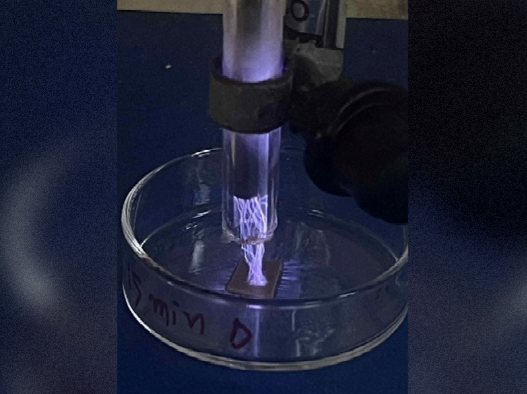
Antimicrobial resistance is a growing public health threat and many conventional antimicrobial packaging films rely on additives, such as nanoparticles and antibiotics, that can migrate into food. The team treated a transparent film made from rice bran protein with argon-generated cold plasma, giving the biodegradable material antimicrobial properties against foodborne pathogens including E. coli, Staphylococcus aureus and Pseudomonas aeruginosa, a bacterium known for its antibiotic resistance.
 Source: University of Arkansas Division of Agriculture
In the lab, the plasma treatment created microscopic spikes on the film’s surface and triggered a chemical reaction that produces and releases hydrogen peroxide, an oxidizing agent known for its potent antimicrobial activity. According to the team, the combination helps prevent bacterial growth.
When exposed to the plasma-treated rice bran films, populations of all three pathogens declined within eight hours and showed no regrowth at 24 hours after application. In contrast, bacteria multiplied on the untreated rice bran films.
The researchers also compared films made exclusively from rice bran with films made from rice bran protein. The rice bran protein films produced more microscopic surface spikes and generated higher concentrations of hydrogen peroxide, potentially contributing to their stronger antimicrobial performance.
The researchers attributed the antibacterial performance to a likely combination of altered surface chemistry, increased surface roughness, enhanced wettability and retained reactive species.