The most powerful ground-based telescope ever built
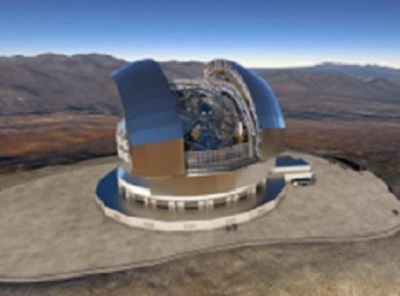
GlobalSpec News Desk | June 18, 2025AGC Plasma Technology Solutions is proud to announce its pivotal role in enabling the European Southern Observatory's (ESO) Extremely Large Telescope (ELT) — the most ambitious ground-based observatory ever constructed — by engineering and delivering advanced vacuum coating facilities in the heart of the Atacama Desert.
The ELT, with its 39-meter segmented primary mirror composed of 798 hexagonal elements, is poised to become the world's largest optical/infrared telescope. To maintain peak optical performance in the harsh desert climate, these mirrors require a high-reflectivity silver-based coating that must be renewed every two years. AGC's mission: design, build and commission three custom-built magnetron sputtering plants to apply and maintain this delicate coating with unmatched precision.
Engineering a critical link in cosmic discovery
AGC's engineering teams leveraged decades of glass coating expertise to develop an industrial-scale coating solution tailored to the ELT's demanding specifications. This included:
- Development of a robust coating recipe for protected silver, optimized for durability and optical
 Source: AGC Plasma Technology Solutions performance through rigorous testing at AGC's Technovation Center in Belgium and Demonstration Center in Germany.
- Design and fabrication of three high-precision magnetron sputtering coaters, with two dedicated to coating the ELT’s 931 hexagonal primary mirror segments and one (under construction) for monolithic concave mirrors up to 4.5 meters in diameter (M2–M5 mirrors).
- Implementation of vacuum systems capable of reaching 2 x 10⁻⁷ mbar base pressure — essential for mirror integrity — despite outgassing from complex mirror support assemblies.
- Integration of a custom-designed optical quality control station to measure reflectance uniformity across the entire mirror surface, ensuring consistent performance segment by segment.
Innovating in harsh environments
Operating in the high-altitude, arid conditions of the Atacama Desert required engineering resilience. AGC's systems were designed with special emphasis on protecting the integrity of the uniquely valuable and delicate mirror substrates, with robust handling mechanisms, cleanroom-level environmental controls and real-time optical verification.
Looking forward
With two coaters now operational at the Paranal site and the third nearing completion in Lauenförde, AGC’s contribution will ensure the ELT maintains its crystal-clear vision of the cosmos — capturing light from the earliest galaxies, distant exoplanets and potentially answering the fundamental question: Are we alone in the universe?
AGC is honored to stand at the intersection of materials science and astrophysical discovery, supporting ESO in this historic leap for humanity’s exploration of the skies.