What's next for plant-based meat: New manufacturing and processing trends
Jody Dascalu | August 25, 2025The plant-based meat industry is undergoing rapid innovation as it seeks to replicate the sensory and nutritional qualities of animal protein while minimizing environmental impact. Advances in processing technologies, ingredient development and formulation strategies are reshaping how meat analogs are manufactured and perceived. This article explores the latest trends driving the evolution of plant-based meat, focusing on high-fidelity texture replication, novel protein sources, clean-label demands and scalable production methods that align with both consumer expectations and industrial feasibility.
Advanced processing technologies
Recent developments in plant-based meat processing focus on improving structural integrity and replicating the anisotropic texture of muscle tissue. High-moisture extrusion (HME) remains the dominant method for structuring plant proteins. Operating at moisture contents above 50%, it uses twin-screw extruders to induce alignment of protein molecules through thermal and mechanical energy. Advances in process control, including precise regulation of temperature gradients and shear forces, have improved reproducibility and textural consistency across production runs.
 Plant based burgers on a grill. Source: Public domain
Shear cell technology has emerged as an alternative to extrusion, relying on laminar shear to orient protein aggregates into layered structures. The process uses relatively simple equipment and lower energy input while producing meat analogs with directional fiber alignment. By adjusting shear rate, temperature and residence time, manufacturers can control the morphology and mechanical strength of the final product.
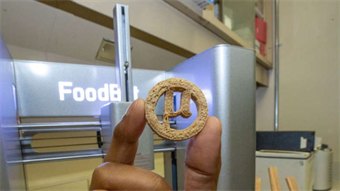
3D printing is also being investigated for plant-based meat fabrication. This additive process deposits formulated pastes in spatially defined patterns, allowing for control over the internal architecture of the product. It enables the production of complex structures, such as marbled or stratified cuts, with variable compositions throughout the material. While primarily used for prototyping or niche applications due to throughput limitations, 3D printing demonstrates potential for precise structural replication and ingredient placement.
Ingredient innovations
Innovation in ingredient systems continues to play a central role in the advancement of plant-based meat manufacturing. One area of focus is the use of mycelium, the root-like structure of fungi, which is valued for its naturally fibrous texture and savory flavor profile. Unlike traditional plant protein isolates, mycelium offers structural integrity without the need for extensive mechanical modification. It also provides a more neutral sensory base, which simplifies formulation by reducing the need for masking agents or complex flavor systems. The cultivation of mycelium requires relatively low energy and resource input, making it attractive from both a production and sustainability perspective.
Another key area involves the use of fermentation-derived compounds. Through precision fermentation, it is possible to engineer microorganisms to produce specific functional ingredients such as heme proteins, flavor precursors and aroma-active compounds. These ingredients significantly improve the sensory realism of plant-based meats by contributing to color development, meat-like flavor formation and iron content. They also enhance the performance of products during thermal processing, where traditional plant proteins often fall short. Fermentation technology, while more complex in terms of infrastructure and regulation, is increasingly being adopted by manufacturers seeking to reproduce the molecular characteristics of animal-derived components.
Product development trends
In response to shifting consumer expectations, product development strategies are increasingly centered on transparency, simplicity and nutritional adequacy. There is a clear movement toward clean-label formulations, which prioritize ingredient lists that are shorter and composed of familiar, minimally processed items. This trend reflects growing consumer concern about the health implications of ultra-processed foods and aligns with labeling regulations that favor clarity and traceability. As a result, manufacturers are gradually phasing out synthetic binders, colorants and flavor enhancers in favor of natural alternatives that provide equivalent functionality.
At the same time, nutritional optimization remains a priority in the development of next-generation plant-based meats. Many legacy products in this category have been criticized for lacking sufficient protein quality or containing high levels of sodium and saturated fat. To address these concerns, developers are improving amino acid completeness by combining complementary protein sources such as legumes and grains. In addition, formulations are being enriched with bioavailable forms of key micronutrients, including vitamin B12, iron, zinc and calcium. Manufacturers are also adjusting fat systems to include healthier lipid profiles while preserving the mouthfeel and cooking behavior of conventional meat. These efforts collectively aim to close the nutritional gap between plant-based and animal-based meat products, while maintaining competitive sensory performance and market appeal.
Sustainability considerations
Environmental sustainability continues to be one of the most frequently cited advantages of plant-based meat. Compared to conventional livestock production, plant-based systems generally require less land, water and energy, and emit fewer greenhouse gases per unit of protein produced. These reductions stem largely from bypassing the inefficiencies of feed conversion in animal agriculture and eliminating emissions associated with enteric fermentation, manure management and land-use change.
However, these benefits are not without qualifications. Critics point out that the environmental impact of plant-based meat varies significantly depending on the specific ingredients used, the complexity of processing and the energy source powering production facilities. For instance, highly refined protein isolates and precision fermentation-derived components may involve energy-intensive steps that diminish the overall gains. Packaging, cold-chain logistics and global sourcing of certain inputs can also increase the carbon footprint. Moreover, questions remain about the long-term scalability and resource requirements of newer ingredients such as mycelium and microbial proteins. While the sector aims to present itself as a sustainable alternative, it must address these concerns transparently and support environmental claims with consistent, peer-reviewed data to maintain credibility in climate-conscious markets.
Regulatory and policy developments
Policy support for plant-based meat is expanding as governments recognize the potential for alternative proteins to contribute to climate goals, food security and public health. Several countries have introduced national strategies that allocate funding for research, development and commercialization of plant-based foods. Denmark’s 2023 national action plan is one example, providing subsidies for innovation, infrastructure and consumer education. Similar programs are being pursued in the Netherlands, Singapore and Canada, often with coordinated support across agricultural, environmental and trade ministries.
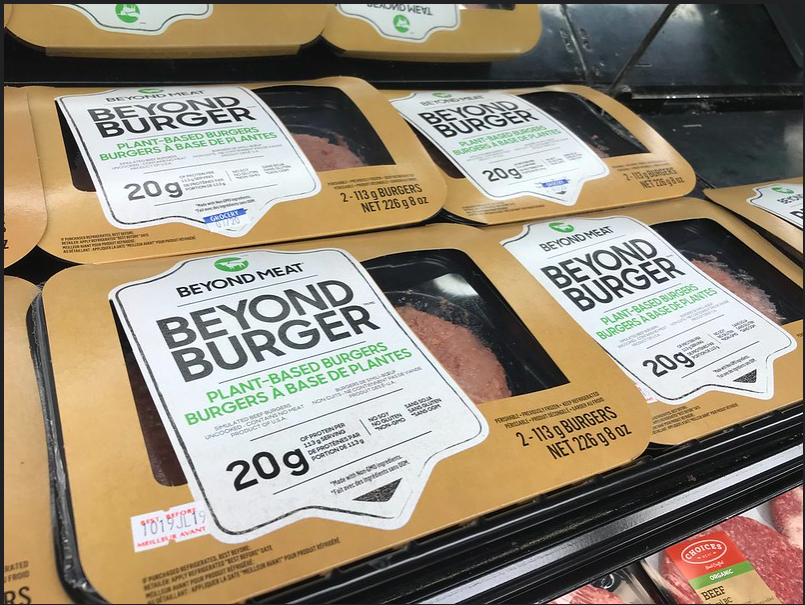 Plant based burgers in a grocery aisle. Source: UBC Media Relations/Flickr
Despite this momentum, policy frameworks remain inconsistent and, in some cases, contested. In certain regions, proposed labeling restrictions aim to prevent plant-based products from using terms traditionally associated with meat, such as "burger" or "sausage," citing concerns over consumer confusion. These efforts are often backed by livestock industry groups and have triggered legal and regulatory debates about naming rights, product definitions and commercial speech. There is also increasing scrutiny of ingredients derived from genetically modified microorganisms or precision fermentation, which may require novel food approvals or face resistance from consumers wary of synthetic or engineered food products.
As regulatory landscapes evolve, plant-based meat companies must navigate a complex mix of supportive initiatives and restrictive measures. Ensuring regulatory compliance, communicating ingredient sourcing transparently and participating in policy discourse will be critical for sustained growth. The long-term viability of the industry will depend not only on technological performance but also on its ability to address legitimate public concerns and operate within diverse regulatory environments.
Navigating the next phase of plant-based meat
The plant-based meat sector is moving into a new phase characterized by technical refinement, market recalibration and evolving regulatory frameworks. While earlier growth was driven largely by novelty and consumer curiosity, current momentum depends on the industry's ability to address limitations in texture, taste, nutritional composition and affordability. Technological advances in structuring methods, ingredient systems and fermentation are closing the performance gap with animal-based products, while clean-label and sustainability demands are reshaping formulation strategies.