Ensure precision: Select the best gear metering pump for your application
Diana Aoun | May 03, 2025Gear metering pumps are a category of positive displacement pumps that use meshing gears to precisely control the flow of fluids. Ideal for high-volume fluid transfer, gear metering pumps deliver accuracy, repeatability, and can handle a wide range of viscosities, making them essential in many industrial processes.
A gear metering pump typically consists of two gears — one driven (power gear) and one passive gear — in a close tolerance housing assembly. As the gears rotate, fluid is trapped between the gear teeth and the pump casing. Fluid is then carried around the outside of the gears and discharged at a controlled, steady rate.
This design enables gear metering pumps to:
· Ensure precise flow control.
· Deliver constant flow rates regardless of back pressure (within limits).
· Provide excellent repeatability with low-to-no pulsation.
Gear pumps come in two variations: external and internal. An external gear pump uses two meshing gears placed side by side, while an internal gear pump features a smaller gear inside a larger internal gear, forming a crescent to direct the flow. External gear metering pumps offer higher precision, tighter tolerances and better pressure handling for accurate dosing, while internal gear metering pumps provide smoother, more gentle flow suitable for high-viscosity or shear-sensitive fluids.
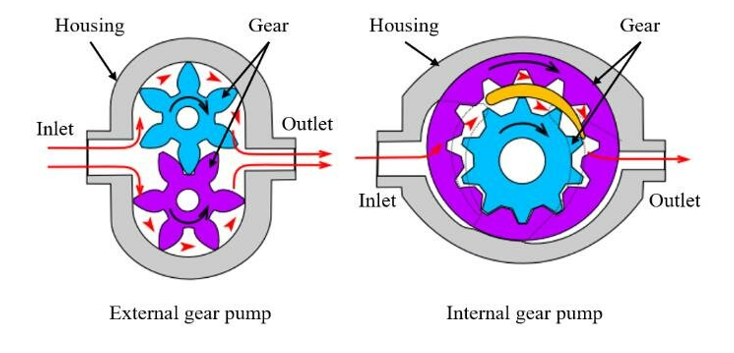 Operating mode of an external and internal gear pump. Source: Geon-Hui Lee, Ugochukwu Ejike Akpudo and Jang-Wook Hur/CC BY 4.0
Advantages of gear metering pumps
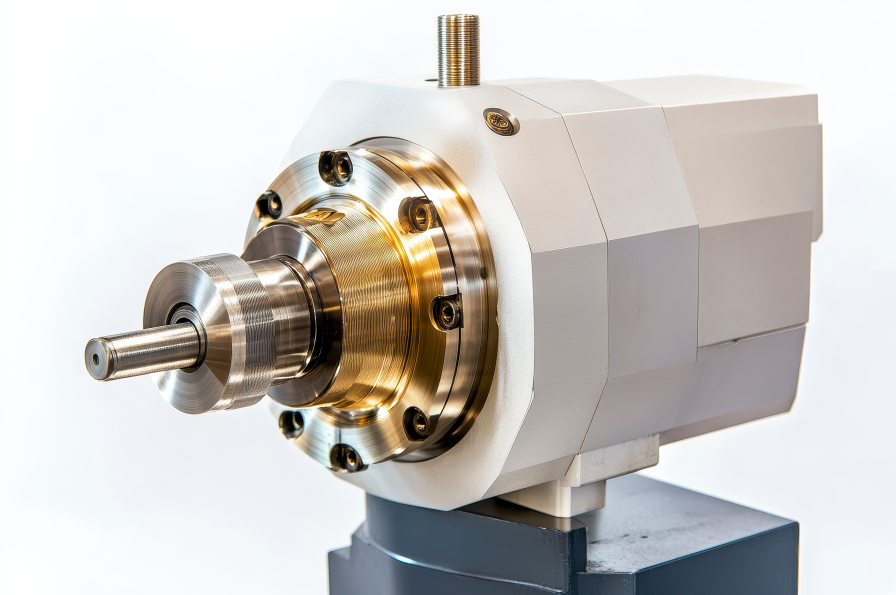 Industrial gear pump. Source: Sengphachanh25/Adobe Stock
Geared metering pumps offer distinct advantages when compared to conventional pump types such as piston, diaphragm or progressive cavity pumps, particularly for applications that require high precision and reliability. Key advantages include:
1. Superior accuracy: Extremely tight internal tolerances enable geared metering pumps to deliver accurate, repeatable dosing. From shot dispensing to continuous operation, they minimize fluid slip and provide a smooth, pulse-free flow that other pump types often struggle to deliver.
2. Durable construction: Made from advanced materials (e.g., ceramics, stainless steel, high-performance polymer, other robust alloy metals), gear pumps are built to withstand harsh environments and media. This includes operation at high temperatures, high pressures and with abrasive or corrosive materials.
3. Consistent performance under variable conditions: Unlike many other pumps, geared metering pumps maintain steady linear flow even under conditions such as fluctuating viscosity, temperature, pressure or motor speed. This stability is crucial for maintaining product quality and process control in precision manufacturing.
Other advantages include:
· Simple design — Gear pumps possess a compact, simple construction with a limited number of moving parts, minimizing maintenance costs and downtime.
· Process automation — Gear pumps integrate well with control systems for automated operation and dosing.
· Efficiency — Compared to other pump types, gear pumps can be more energy efficient in small-volume, high-precision tasks, and can minimize waste thanks to accurate, repeatable delivery.
Common applications
Gear metering pumps are commonly used in industries and applications where accurate dosing and/or flow control are critical. Some examples include:
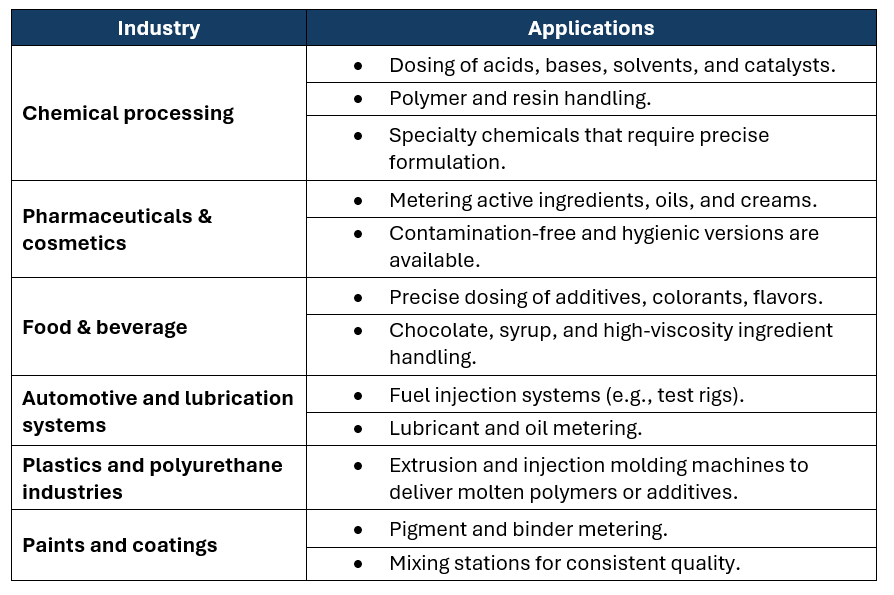 Table 1: Industries and applications of gear metering pumps. Source: Diana Aoun
Pump selection considerations
Selecting the most appropriate gear metering pump for a given application is critical to ensuring optimal performance and achieving desired process outcomes. Fluid characteristics, operating and environmental conditions, relevant standards or regulations, are some of the factors that can influence this choice. Some key considerations during the pump selection phase should include the following:
1. Clearly defined application requirements: Provide the pump manufacturer with complete and accurate application data. This includes minimum, normal and maximum flow rates; inlet and discharge pressures; temperature range; viscosity of the fluid; presence and nature of solids; and preferred materials for wetted components. Accurate data ensures the pump is properly sized and configured. Any relevant standards or regulations that the pump/process must comply with should also be provided.
2. Understand fluid characteristics: Know what fluid you'll be handling, which should include characteristics such as corrosiveness, abrasiveness and viscosity (up to 2 million cP for some models). For abrasive or high-viscosity fluids, pumps made of hardened tool steel may be ideal, while stainless steel versions are better for corrosive or sanitary conditions.
3. Pressure and flow requirements: Precision gear metering pumps can deliver flows as low as 0.0005 L/min and handle pressures up to 10,000 psi. It is essential to selecting a pump that meets or exceeds process requirements while maintaining pulse-free, accurate delivery.
4. Avoid dry running: These pumps rely on fluid for lubrication. Even brief dry operation can damage bearings and seals. Ensure operating procedures and control systems prevent this scenario.
5. System integration: Consider ancillary components such as strainers, isolation valves and pressure relief valves, which may be essential for performance and protection.
6. Storage and maintenance planning: Determine whether the pump will be stored before use or intermittently used and apply suitable long-term storage procedures where necessary. Although fewer moving parts make gear pumps easier to maintain, adhering to the manufacturer’s instructions/recommendations can ensure long-term reliability and that equipment stays under warranty coverage.
In summary, gear metering pumps are an ideal choice for applications where stable, accurate flows, reliability and material compatibility are a priority. They provide consistent, pulse-free flows, can handle a wide range of viscosities and require minimal maintenance. They are commonly used in high-value applications in the chemical, pharmaceutical, food, aerospace and aviation, and other industries.