Sensor System Finds the Quickest Checkout Line
Engineering360 News Desk | February 02, 2016UK-based product design and development firm Cambridge Consultants has devised a queue-monitoring service that allows shoppers to see where they are most likely to be served first, even in a large department store where the shortest line might be on a different floor. The company's ZipLine system uses infrared sensors to detect the number of people in a queue and how fast the line is moving. The technology can cope with irregular queues that snake around shop displays.
Because it works from body heat, there are no privacy issues, as it does not record or identify individuals. The sensors are combined with a long-range, low-power radio network, allowing it to be deployed anywhere. It also uses an algorithm set that converts raw data from the sensors into useful information displayed on a shopper’s phone.
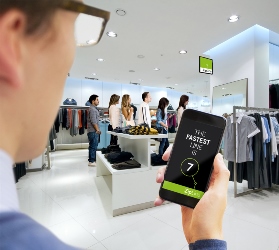 ZipLine uses infrared sensors to detect the number of people in a queue and how fast it is moving. Image credit: Cambridge Consultants. ZipLine is designed to handle queues that are not all in the same place. Its radio technology enables it to work over distances of up to several kilometers. That makes it possible to monitor waiting times at cash registers that may be out of view in a store or, say, all the coffee shops within a particular radius from a town center.
“In the increasingly competitive retail sector, technology can be a crucial differentiator,” says Tim Ensor, head of connected devices. “[ZipLine] aims to show how taking a service design approach to a problem can give a retailer vital competitive edge by transforming the customer experience."