Will garbage dumps fuel a hydrogen revolution?
Ryan Clancy | March 08, 2023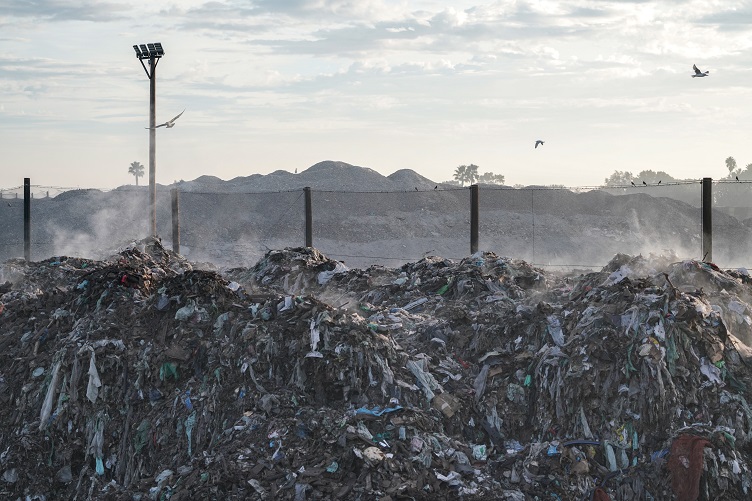 Garbage dumps could play a major role in hydrogen fuel cell vehicles as they contain many sources of hydrogen. Source: vkingxl/Pixabay
As countries around the world race to reduce their reliance on fossil fuels and move toward more sustainable energy sources, one potential answer lies in landfill garbage dumps — but can they be used to generate hydrogen from waste?
Hydrogen has been a promising fuel technology ever since the idea was first popularized with concept vehicles in the 1970s. However, after nearly 50 years of sporadic development, hydrogen fuel cell vehicles (FCVs) are a small footnote in the greater automotive landscape.
At least part of the reasoning is due to the difficulty of creating or capturing hydrogen in large scale amounts.
How is hydrogen produced?
Hydrogen is often produced through chemical processes involving natural gas, petroleum or coal — but for the purposes of an FCV, this counters the low carbon footprint of the car, which is the entire point.
Instead, carbon for FCVs is typically produced via electrolysis of water, which separates hydrogen from water molecules. The hydrogen is then compressed at pressures of H70 or 700 bar, and supplied to vehicles via fueling pump, much like traditional petrol.
One major benefit is that hydrogen can be produced on-site via dedicated electrolysis stations, provided there is a water supply. Some research has shown that hydrogen could even be synthesized from atmospheric humidity.
However, the costs to manufacture hydrogen by electrolysis at a commercial scale is cost prohibitive. It’s why R&D continues to look at various convenient and efficient ways to manufacture and distribute hydrogen fuel.
How do garbage dumps fit into this?
Garbage dumps could have a major role to play in the growth of FCVs, as many of the wastes they contain are rich sources of hydrogen. Plastic waste and municipal solid waste contain numerous compounds that can be converted into molecular hydrogen through several different processes. Medical waste is another important source of hydrogen, containing various chemicals and pharmaceuticals from which gas-producing microbes can extract hydrogen molecules. Additionally, landfill gas produced at Puente Hills already contains up to 50% methane — a hydrocarbon composed of one carbon atom and four hydrogen atoms — which has the potential to be further processed into purer forms of molecular hydrogen with advanced technology.
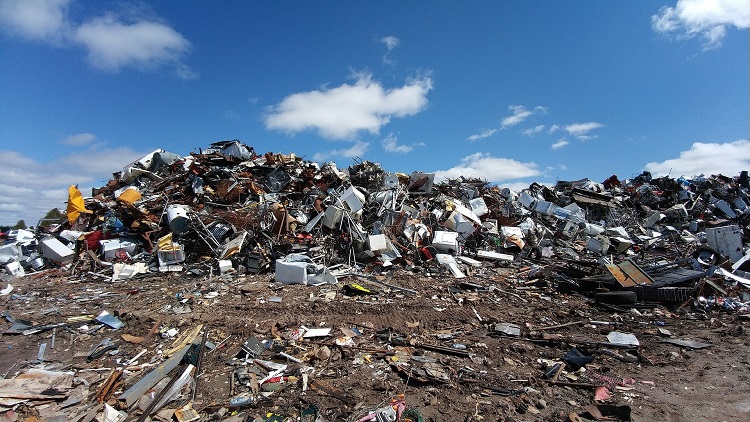 Hydrogen fuel cells may get a boost due to breakthroughs in technology using landfills for fuel sources. Source: Katie Rodriguez/Unsplash
The Ways2H system
The Ways2H system is an innovative approach to creating clean, renewable energy from waste. Compared to conventional gasification plants, it offers several advantages.
Firstly, the pre-treatment process of the waste ensures that materials without carbon or hydrogen — such as glass and metal — are removed. This helps to create a more efficient fuel source with fewer impurities.
Secondly, the vaporization chamber heats the shredded waste pieces to over 1,000° F, which produces syngas — a mixture of hydrogen, methane and carbon dioxide, which can be used as a fuel source or further refined.
It also increases the efficiency of energy production by mixing steam with the syngas. This enhances the concentration of hydrogen in the syngas, resulting in higher energy yields and fewer emissions.
The syngas is then sent to an internal combustion engine or fuel cell to generate electricity. The system can also be customized for specific sites by adjusting the concentration of the hydrogen according to the needs of each project.
The Ways2H system provides a cost-effective and efficient way to create renewable energy from waste. By reducing reliance on fossil fuels, it helps to reduce greenhouse gas emissions, improve air quality and contribute toward a more sustainable future. With its impressive performance in comparison to conventional gasification plants, this revolutionary technology shows great potential for helping achieve environmental sustainability.
Will garbage dumps fuel a hydrogen revolution?
It seems unlikely that even if most landfills begin producing hydrogen en masse, that this would be enough to disrupt the foothold EVs have on the green vehicle market.
However, it would help solve one of the more challenging obstacles for more widespread use of FCVs. The Ways2H system is one way in which this could be done. This system uses a process to extract hydrogen from methane gas. While more research needs to be done into this area, garbage dumps could play a key role in the future of sustainable energy production.