Hydrogen electrolysis finds some unlikely water sources
Grace Watson | June 22, 2026
Urine...for a surprise! Sorry, we had to.
Green hydrogen technology holds promise as a major scientific advancement that could help reach decarbonization goals. Green hydrogen is obtained through electrolysis, which is a process where electrical current separates hydrogen from oxygen in water. When this current is obtained from renewable resources, it is a form of green energy.
Additionally, green hydrogen emits only water vapor when burned. It is a multifaceted fuel for commercial, industrial and consumer uses.
The IEA projects as much as 830 million tons of carbon dioxide could be eliminated every year when compared to fossil-fuel-based production, or grey hydrogen. For scale, this is the amount of carbon dioxide emissions of the United Kingdom and Indonesia combined annually
Recent research propels green hydrogen
Despite its overwhelming positivity, green hydrogen production is costly. Renewable resources are still not 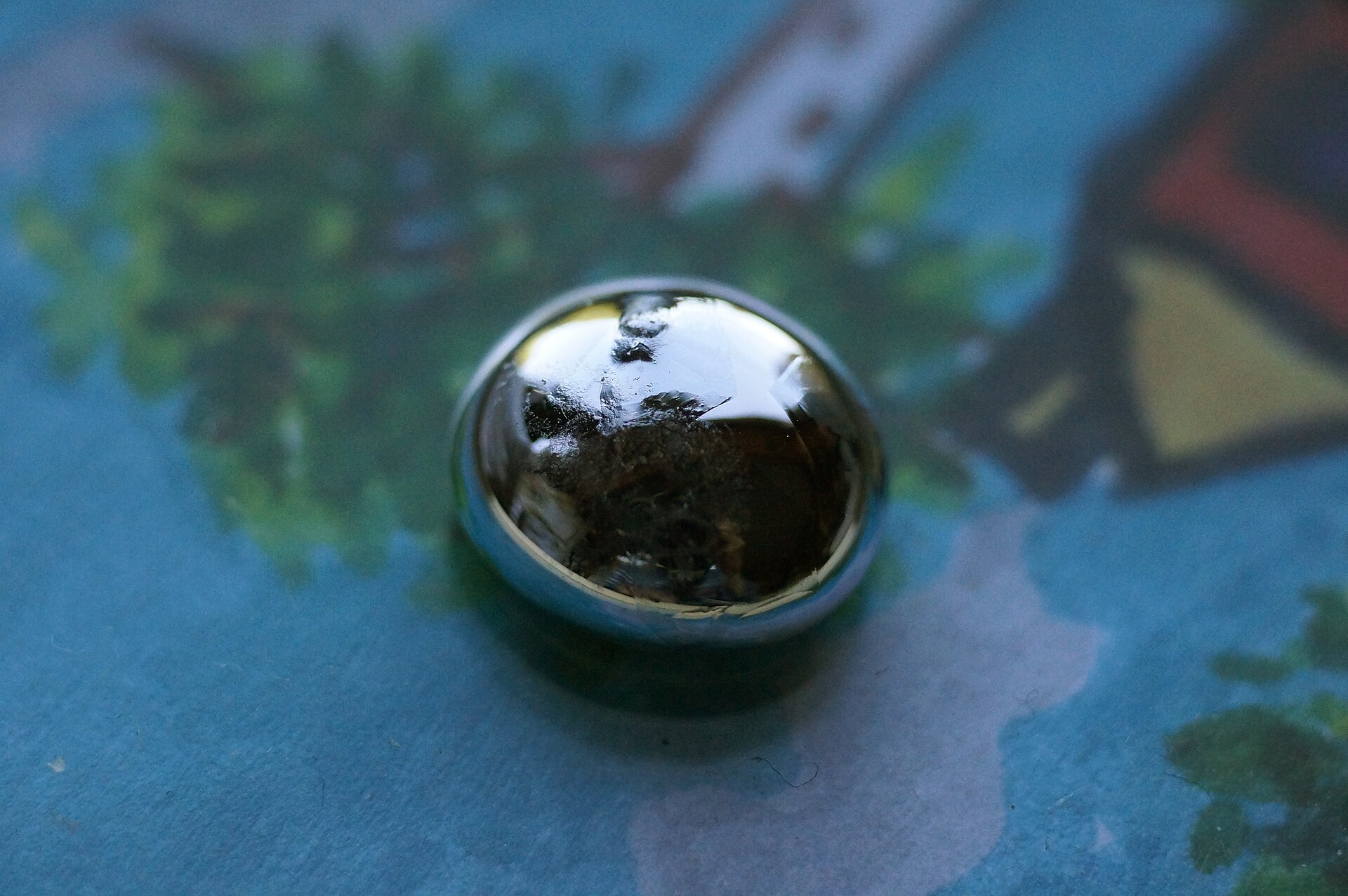 Gallium is used in H2 production to separate water molecules widespread in adoption. This can drive the cost of hydrogen up to more than 10 times than grey hydrogen. It also needs to be stored in a specialized manner, typically in expensive, energy-intensive cryogenic systems. Green hydrogen needs large amounts of clean water to undergo electrolysis. This is a major issue considering two thirds of the global population face water scarcity.
Ongoing research aims to clean up some of these issues. Here are two strategies with vastly different approaches.
Solar meets sea
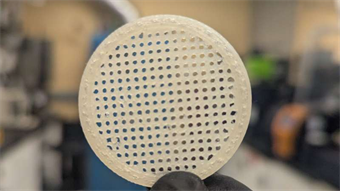
Cornell University researchers have developed a hybrid solar distillation-water electrolysis device that produces green hydrogen from seawater using sunlight. The process simultaneously yields potable drinking water and emissions-free fuel — beginning as a thermal distillation project in 2023 and now advancing into hydrogen production.
The device works by trapping seawater into a thin film via a capillary wick placed in direct contact with the solar panel. Rather than heating an entire body of water, this raises evaporation efficiency to 90%. The desalinated water is then condensed into clean water, with salt left behind.
The system also makes use of heat that standard photovoltaic (PV) cells discard: while most traditional PV cells convert roughly 30% of sunlight into electricity, the residual waste heat is redirected to warm the seawater for distillation. The team has built a 10 cm x 10 cm prototype to advance this approach — one that could also apply to conventional solar farms as a panel-cooling mechanism.
At its current stage, the device produces 200 milliliters of hydrogen per hour at 12.6% energy efficiency. The team projects green hydrogen could reach $1 per kilogram within 15 years, down from today's $10 per kilogram. For context, the average hydrogen vehicle gets roughly 50 km to 100 km per kilogram (30 miles to 60 miles/kg), making that cost reduction significant relative to current gas prices and fuel economy.
Pee power?
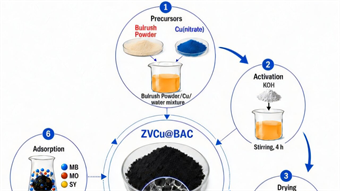
Human urine and wastewater can also be used in green hydrogen production. It is a reoccurring source of  Urea method reduces energy use by 27%. Source: University of Adelaide and the ARC Centre of Excellence for Carbon Science and Innovationurea and newer strategies for remediation and usage are beneficial not only to fuel production, but also for water management and treatment.
Researchers from the Australian Research Council Center of Excellence for Carbon Science and Innovation and the University of Adelaide have identified two new pathways to produce green hydrogen from urea-based sources. Both are cost-effective and energy-efficient, and either system has the potential to use 20% to 27% less electricity than typical electrolysis.
Electrolysis using urea as a feedstock requires significantly less energy than electrolysis using clean water — not a new concept in itself, but the researchers' approach improves on existing urea-based systems, which struggle to extract meaningful hydrogen yields and produce toxic nitrates and nitrites as byproducts. The new systems instead produce neutral nitrogen gas, which is less harmful to aquatic ecosystems.
Their first system uses pure urea with a membrane-free design and a copper-based catalyst, isolating cost savings as its primary advantage. However, pure urea is synthesized through a process that releases carbon dioxide, which partially undercuts the environmental case.
The second system addresses that problem by sourcing urea from human urine or wastewater with high nitrogenous waste content — a readily accessible source. This process uses chlorine-mediated oxidation mechanisms, powered by platinum-based catalysts on carbon supports, to generate hydrogen.
Further development is needed, primarily because platinum is an expensive material. The researchers aim to replace it with carbon-supported, non-precious metal catalysts. Continued work in this area could lower green hydrogen costs, create a productive remediation pathway for nitrogenous waste, and advance membrane-free wastewater electrolysis systems more broadly.
Color contrast
Hydrogen production is often categorized on a color scale.
Black or brown hydrogen is the worst for the environment as it uses bituminous or lignite coal gasification. Grey hydrogen, as previously mentioned, is created using natural gas and methane through steam methane reformation. Blue hydrogen is similar, but it captures and stores some of the emitted carbon dioxide.
Pink hydrogen is similar to green, but uses nuclear energy as a non-renewable resource to power electrolysis. Purple uses nuclear and heat. Red hydrogen is produced using heat and steam from nuclear plants and uses less electricity than typical electrolysis. Orange uses plastic waste as a source, but is still in early research stages.
Turquoise hydrogen is also in development — it puts natural gas under a process called methane pyrolysis for decomposition. Yellow hydrogen uses solar energy only, akin to what Cornell University is studying.
Yet all of these are just means to power the resource intensive electrolysis process. In addition to electrical needs, an commercial-sized plant will use 45.1 million gallons of water per year and use up 26.4 million gallons of this water to make 11,000 metric tons of hydrogen.
This is why it is revolutionary for non-drinking seawater and human wastewater to be promoted for green hydrogen production. Time will tell if hydrogen will be the fuel source of the future, but recent advancements continue to point toward yes.