A tiny ozone generator for water disinfection at home
S. Himmelstein | February 04, 2021Ozone is a powerful, environmentally friendly disinfectant used for large-scale water treatment in municipal drinking water systems and swimming pools. Its use could be extended to smaller scale applications such as domestic beverage dispensers, showers and other residential appliances with the development of a compact ozone generator.
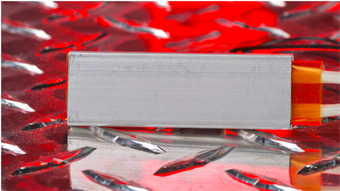
The system is being developed in Germany under the MIKROOZON project funded by the State of Schleswig-Holstein and the European Union. The prototype is just a couple of cubic centimeters in size and is designed for placement within the water-flow line of a third-party water-dispensing appliance. The  The electrodes for the ozone generator are made of silicon wafers with precisely etched trenches. Source: Fraunhofer Institute for Silicon Technologyminiaturized device features an electrolysis cell, a sensor chip, control electronics to regulate current and voltage and electronics to read the sensor signals.
Pairs of diamond-coated silicon electrodes are installed back to back, spaced by a separator membrane. Gases released are directed through narrow trenches etched through the electrodes to narrow slits formed on the reverse side to facilitate their dispersion through flowing water. Sensors measure conductivity, mass flow and temperature to control the electrolytic process. The use of these sensor monitors enables the mini ozone generator to treat up to 6 liters of water per minute.
Researchers from Fraunhofer Institute for Silicon Technology, CONDIAS GmbH and CONDIAS partner Go Systemelektronik GmbH are collaborating on the development of the disinfection device.