Rubber-like material shows promise as a substitute for human tissue
Marie Donlon | March 16, 2020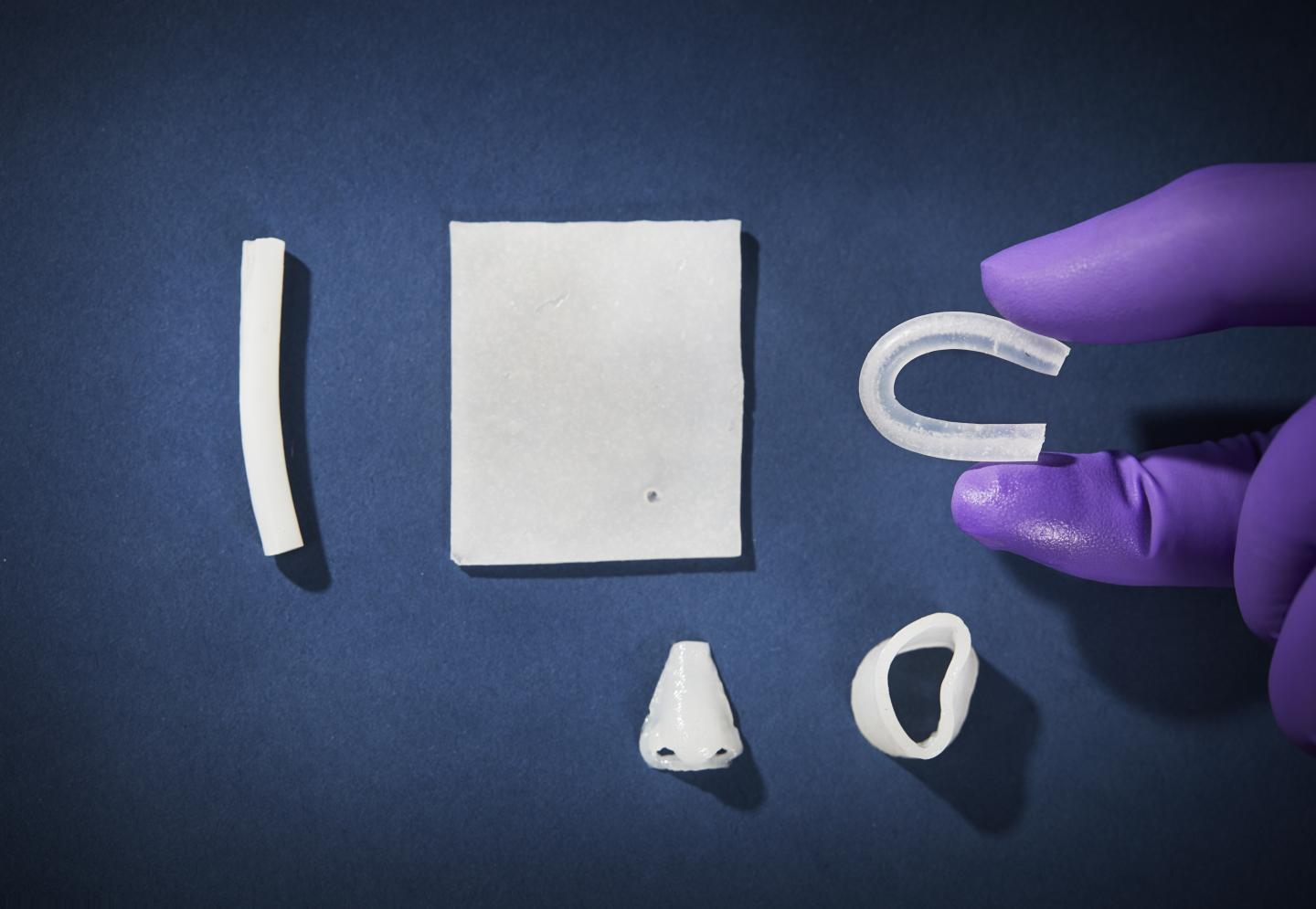 Researchers at Chalmers have developed a new synthetic rubber-like material with a unique combination of properties. The material could be suitable for applications in various medical devices for supporting or replacing human tissue. The 3D printed 'nose' in the image is an example of how the material could act as a possible replacement for cartilage. Source: Anna Lena Lundqvist/ChalmersResearchers from Sweden’s Chalmers University of Technology have developed a material that shows promise for replacing human tissue in medical applications.
The team built the material using plexiglass — which is commonly used in medical applications. The Chalmers’ team reconfigured the plexiglass through a nanostructuring process, resulting in a rubber-like material that is soft, elastic and flexible.
According to the Chalmers’ team, the material integrates well in the human body and has proven to work without putting patients at risk of infection as other foreign materials sometimes do. Likewise, the material’s surface could be enhanced with antimicrobial peptides, which are tiny proteins that are a component of the human immune system.
Furthermore, the material also includes three dimensionally ordered nanopores that can be imbued with medications for localized treatments. For instance, the material might be injected with anti-inflammatory medications.
Whether injected into the human body as a viscous fluid or 3D printed into specific structures, the material could be used to develop material to replace or support human cartilage, to develop medical devices such as urinary catheters or used in plastic surgery applications, including as a cosmetic filler.
The research appears in the journal ACS Nano.