
Study: American's toilet paper preference impacting the environment?
Marie Donlon | March 01, 2019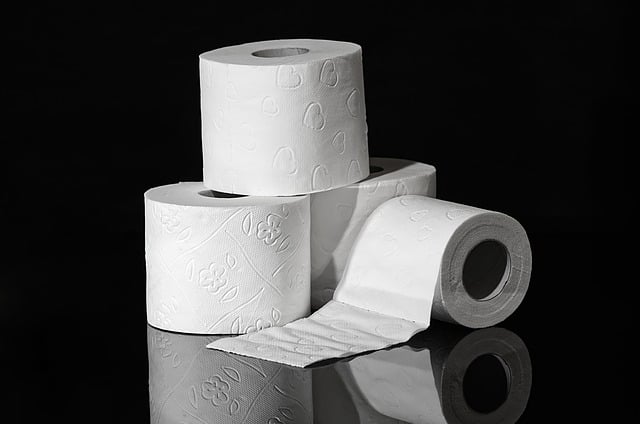 According to a report from the environmental groups the Natural Resources Defense Council (NRDC) and Stand.earth, Americans opting for luxury-brand toilet paper are negatively impacting the environment.
Toilet paper, particularly the kind that promises a pillowy-soft texture, is made up primarily of virgin pulp from Canada’s boreal forests. Covering nearly 60% of Canada, the forests absorb enough carbon dioxide from the atmosphere each year to equal the annual emissions of 24 million cars, according to the report. Yet, each year 28 million acres of the forests are cut down for the purpose of creating luxury brand toilet papers popular among Americans thanks to decades' worth of marketing schemes surrounding the softness of toilet paper, making Americans some of luxury toilet paper’s biggest customers. Consequently, some brand name manufacturers that produce the soft-textured papers refuse to switch to sustainable materials.
Although they make up just over 4% of the global population, Americans are responsible for over 20% of the world’s toilet paper consumption. For instance, an average four-person U.S. household uses 100 pounds of toilet paper each year, according to the report.
In addition to the forests' carbon dioxide absorbing features, The boreal forests are also home to 600 indigenous communities.
"As Indigenous Peoples in the boreal forest, we live on the food from our land. The forest is our supermarket, with aisles of berries and meats and fish. My hope is that, once people know that their choice of tissue will determine whether food will be there for us tomorrow, they will help protect our homelands by switching to recycled and responsibly sourced products," said Deputy Grand Chief Mandy Gull, Cree Nation.
Sustainable options are becoming more prevalent with a number of toilet paper brands such as Seventh Generation and Natural Value receiving high sustainability scores from the NRDC and Stand.earth report for their use of sustainable materials, whereas brands like Charmin Ultra Soft and Angel Soft received failing grades.


NRDC approved toilet paper:
In reply to #1
Gotta be careful there. I had poison ivy from head to toe when I was 11 or 12, and I knew what it looked like.
People given the choice between virgin toilet paper and already been used paper will choose ________ .
I've always bought recycled paper... I don't see why not. Bamboo is a better alternative-- grows faster, obvious choice. Hemp would be better, as well. And a bidet is even better still, and more sanitary.
https://hellotushy.c
https://grist.org/li
I got away almost 100% on toilet paper by installing what is called a mini bidet. In my case I adapted a kitchen sprayer to the water line and can easily clean my self in seconds with no paper or just a tiny amount to dry if needed. I found this on a visit to Thailand some years back at a private home, gave it a try and never looked back. I used to get some rashes in summer heat but with this cleaning never an issue again. I probably use one cup of water total. How many trees can we save with this procedure?
I will admit it took a small leap in faith to try it first time having used TP for 55 years. Yes you can teach an old dog new tricks.
I prefer washing to wiping, as I'm sure most everybody would if recognizing the choice...consequentl
I was reading another article on the same subject and they gave the statistic that the average American uses 9 rolls of TP a week...crazy!
I have been living in Finland for 13 years and use of a "toilet shower" is quite common. It reduces your consumption of paper to almost nothing and a roll lasts several weeks. Once you start washing, you will never go back. When I travel back to the States, I miss my shower so much!
In reply to #6
That must be a Finnish article.
According to the " toilet paper encyclopedia " , 9 rolls could be : 4500, 9000 or 18,000 sheets.
In reply to #8
No, I don't remember where it was from but they named names as to who was doing the cutting. I found a couple of articles that says 3 rolls per week...maybe I had a "senior moment" and remembered the wrong figure
https://theprovince.
https://www.bizjourn
But still, when you consider that a roll lasts me several weeks that says a lot.
In reply to #9
Three rolls a week is still an absurd number. One roll lasts me about three weeks. I could see a family of six using 3 rolls a week as it was the case when we had three daughters and a son in the household with the missus and me.
Sounds like a load of .......
What a bunch of softies we have become, I remember during WW 2 as a child, we had to cut small squares from newspapers to do the job
In reply to #11
Well I guess that is better than a corn cob.
In reply to #11
or keep an old Sears catalog in the outhouse to tear the pages out of.
In reply to #13
but the glossy pages aren't worth a cr . . . . for cleaning anything.
As a 40 vet of the paper industry I can tell you that any responsible company making virgin pulp (the raw material for paper cited here) is planting three times the number of trees that it is cutting down or it wouldn't be in business long.
In reply to #16
Yes but those folks won't talk about how sustainable it is when it doesn't fit into their agenda.
thank you so much for this amazing blog
https://www.edutour.
Those forests must contain the softest pine available.