Affordable Prosthetics Through 3D Printing
Roger Pink | September 25, 2018The past decade has seen 3D printing go from a novelty to a disruptive technology. Bridging the gap between prototyping and production, what has been a niche technology up until this point appears to be assuming a larger role in many industries. Improvements in materials, software and printing technology are leading to more options, faster printing and lower costs.
A diverse range of companies such as Nike, Amazon, Ford and Airbus have all incorporated 3D printing in-house. One industry that is starting to see significant benefits from the technology is prosthetics.
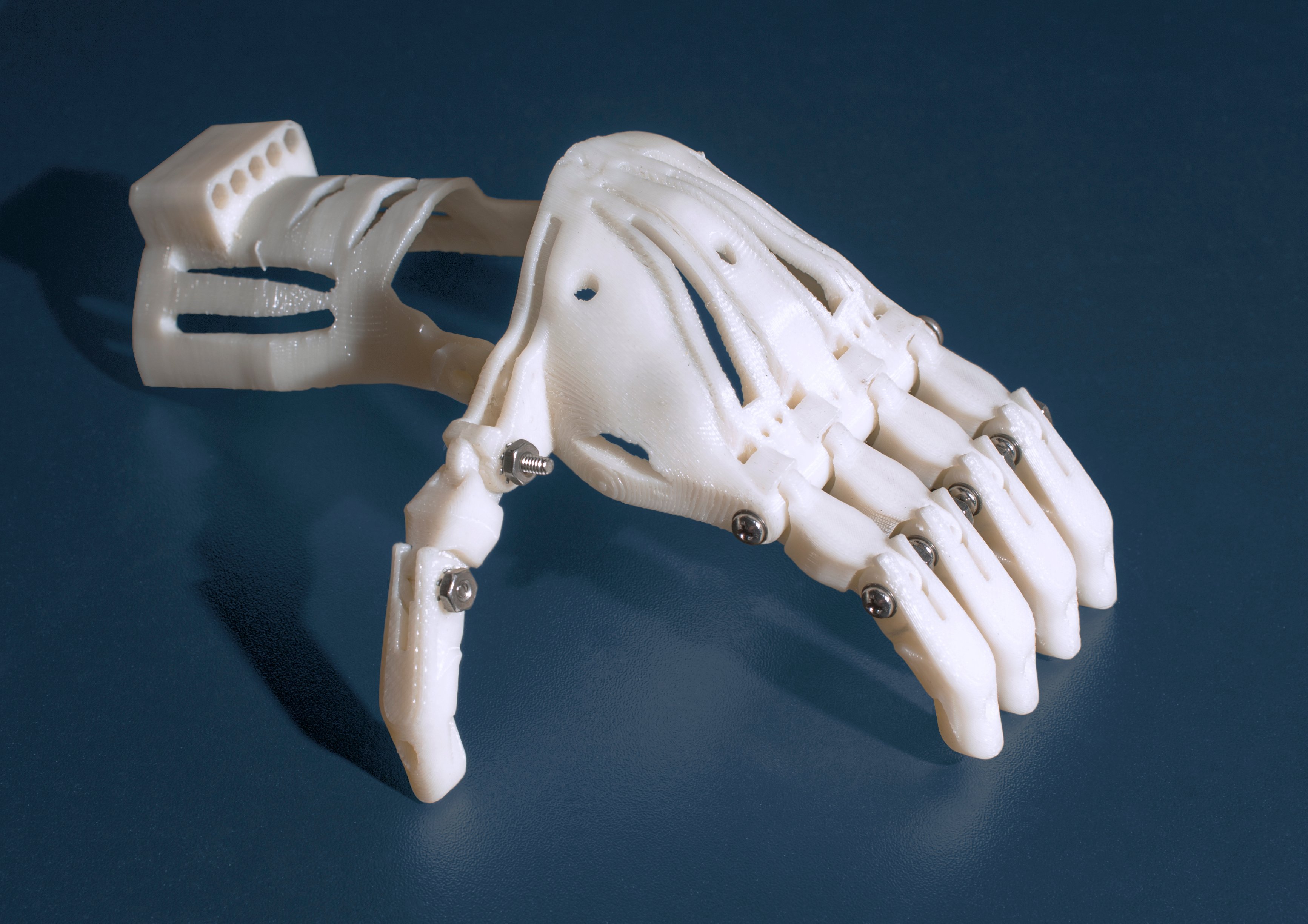 3D-printed prosthetic hands can cost as little as $50.Prosthetics is a growing market that is expected to have a compound annual growth rate of 5.7% over the next seven years. By 2025, the global market is expected to be worth roughly $2.8 billion. In the United States, patients can expect to pay anywhere from $5,000 to $50,000 - a significant financial burden - for a prosthetic. While prosthetics are cheaper in other countries, they still are expensive when compared to the local cost of living, effectively preventing many who need prosthetics from acquiring them.
Much of the cost comes down to a need for prosthetics to be custom-fit to an individual. This prevents cost-effective large-scale manufacturing. Production time can take weeks to months and must be done in specially equipped workplaces. Required skilled labor and shipping costs drive the price up further.
The manufacturing issues described above are ideally suited for a 3D printing solution. It is therefore not surprising that 3D-printed prosthetics is a growing market.
3D-Printed Solutions
As materials and technologies have improved, 3D-printed parts have evolved. A vibrant, open-source community has quickly found new applications for 3D printing. A variety of strong, cheap prosthetics are springing up among the multitude of parts under development. The 3D-printed prosthetics can be designed specifically for the patient, incorporating limb size and even the patient’s work in order to produce the most effective prosthetic for that use case.
Prosthetics produced using 3D printing have many economic advantages over traditional ones. Since a 3D printer can be located onsite or in strategically selected central locations, shipping costs are significantly reduced. The specialized nature of 3D printing is well-suited to the inevitable customization required for each individual patient. Material costs are lower since the 3D-printed designs tend to be more specialized and efficient. The designer does not need to be onsite, since scanned limbs along with background information can be provided remotely.
There are many advantages from the patient's point of view as well. The prosthetics tend to be lighter, for instance. The designs are more specialized for the patient's needs and thus can be more functional in everyday life. The prosthetics are easily replaced if they are lost, damaged or destroyed. The waiting time to receive the new prosthetic is much shorter. Most importantly, the cost of the prosthetic can be an order of magnitude lower, making the devices affordable for more patients.
3D printing is still a relatively new technology with much room for improvement. As materials, technologies and software improve, there will significant improvements in printed parts. Additional cost savings will be possible in the future as the technology develops. Furthermore, prosthetic quality will likely increase as well. What once was a high-end market, out of reach for most, should become a market for anyone in need. 3D-printed prosthetics are an example of how additive manufacturing is disrupting traditional manufacturing and making the world a better place.