How to Succeed as the Makerspace Movement Gains Steam
August 22, 2018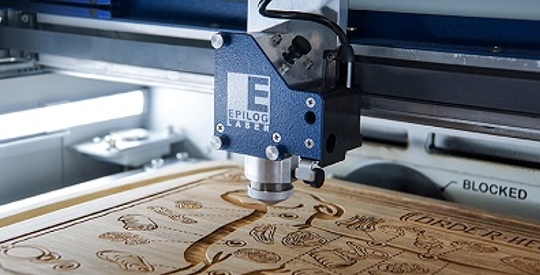 Figure 1: Cutting board inside an Epilog Laser machine. Source: Epilog LaserMakerspaces have exploded in popularity and number worldwide, with user-reported groups in the thousands. Also called hackerspaces or innovation labs, these establishments serve as communal workshops where makers can share ideas and tools. These creative communities can pop up anywhere, including in schools, libraries and community centers, offering resources ranging from 3D printers to synthetic biology kits.
The maker movement is a growing trend based on the philosophy of doing, building and creating instead of just simply buying. Participants take advantage of greater access to 3D printers, laser cutters and engravers, design software and other tools to invent and create in ways that might previously have been limited to manufacturers or businesses. In addition, they offer training and workshops, provide support to users by either helping them complete projects or by connecting makers together to collaborate on projects together.
The movement has its roots outside of schools, in institutions such as science museums and in the informal activities that people have taken part in for generations. The popularity of public events such as maker fairs and the rise of cheap digital tools, including microcontroller platforms such as Arduino and rapid-prototyping tools such as 3D printers, has fueled its growth.
These spaces are also helping to prepare those who need the critical 21st-century skills in the fields of science, technology, engineering and math (STEM). They provide hands-on learning, help with critical thinking skills and even boost self-confidence. Some of the skills that are learned in a makerspace pertain to electronics, 3D printing, 3D modeling, coding, robotics and woodworking,
Starting a makerspace is a process involving multiple factors: finding the right space, attracting participants, securing tools and equipment and defining themes for projects. Here are some considerations for establishing a successful creative commune:
Find the Right Space and Define Themes
Every makerspace is unique in terms of design elements, resources and tools that reflect the community it serves. When choosing a location for a school or community center makerspace, it’s not necessary to dedicate its use to just one particular group or class.
A makerspace can be set up almost anywhere, with schools and libraries being the most common locales. Consider whether the space will be devoted to one theme – such as robotics – or if multiple groups will be active in pursuing different projects. This will also dictate how much space is needed to accommodate all users.
Equipment and Tools
What are the ages of the users? Different age groups will require different furniture heights and sizes. Look for furniture with adjustable-height legs and seating that will accommodate different users.
Consider whether or not you’ll be offering an area to work with manual or power tools. If so, it will need a surface that can sustain damage, such as a butcher block. Laser engravers, laser cutters, CNC machines and 3D printers have become more accessible to consumers and are great additions to makerspaces. Low-tech materials such as Legos, duct tape and cardboard, along with LEDs and assorted electronics, can also be on hand to spur creativity and experimentation.
Don’t forget safety precautions, which should include eye protection and welding screens.
Funding to Keep the Fun Going
The quickest way to fund a makerspace is to write grants. These are not easy to secure but can jump-start a space very quickly. Emphasize the skills that students, staff and other participants are going to acquire by using new tools.
Reaching out to local businesses is another option to support a fledgling makerspace. Asking the community to connect with a space can broaden opportunities for supplies as well as chances for future collaborations. Charging modest membership or user fees can also help keep the space self-sustaining.
While makers aren’t typically in it for the money, the movement is neither definitively for-profit, nor anti-commercial. But one thing everyone can agree on is that makers have a hands-on DIY attitude built on a foundation of curiosity and creativity.
The Future
Makerspaces are gaining more ground in universities and other educational institutions as a novel approach for boosting creativity and innovation, as well as providing more opportunities for hands-on learning. In an increasingly competitive global market, there is a need to educate future engineers with the necessary skills for greater creativity.
One of the major factors driving the growth of the global K-12 makerspace materials market will be an increasing demand for experiential learning. This mode of instruction enables students to engage in activities such as tinkering, building, sharing ideas and designing models or prototypes for new products.
Laser engravers and cutters from Epilog Laser are easy to use on a variety of materials, including wood, acrylic, fabric, cork, rubber, leather and more. Contact the company to schedule a hands-on demo and find out what an incredible addition an Epilog machine could be for your makerspace.