Watch: Volcanic Infrasound Changes May Signal Eruptions
S. Himmelstein | February 21, 2018A new approach to improving the ability to forecast potentially catastrophic volcanic eruptions has been 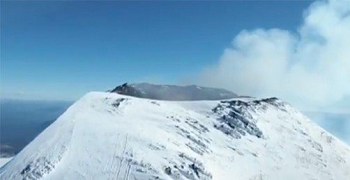 The summit of Villarica volcano in Chile. Source: Jeffrey Johnson, Boise Statedemonstrated. Volcanoes, especially open-vent systems with active degassing are effective at producing infrasound marked by resonant tones controlled by the geometry of the volcano's crater. Monitoring changes in the infrasound characteristics can signal a rise in lava lake level and eruption activity.
Stanford University and Boise State University researchers collected data from infrasound monitoring stations established on the slopes of the Villarrica volcano in southern Chile just prior to a violent eruption in March 2015. Analysis of sonic trends revealed that the pitch of the ultrasound increased during the build-up to the eruption while the duration of the signal decreased. Flyovers in aircraft documented changes in Villarrica’s lava lake, allowing researchers to explore connections between its height and the sound generation.
Tracking infrasound in real time and integrating it with other data, such as seismic readings and gas emission, might help alert nearby residents and tourists that an open-vent volcano is about to blow. Closed-vent volcanoes such as Mount St. Helens in Washington state, however, do not generate the same kind of infrasound and thus pose additional forecasting challenges.