Testing Clean Tech Sensors for Coal-fired Power Plants
S. Himmelstein | February 01, 2018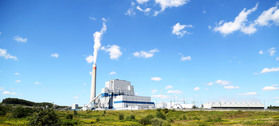 The Longview coal-fired power plant. Source: West Virginia University
Research is underway at the Longview Power Plant, operated by LLC in Maidsville, West Virginia, to improve the economics, efficiency and environmental performance of coal-fired power generation.
A gas sensor devised at U.S. Los Alamos National Laboratory and a corrosion sensor engineered at West Virginia University will be tested at the 700 MW power station. State-of-the-art electricity generation and emissions technologies are deployed at the facility, including best available control technology that outperforms current strict environmental regulations.
The wireless, self-powered corrosion sensor can withstand the high temperature, ash-laden environment of the fire side of a utility boiler. The device signals the early signs of localized corrosion of key equipment, such as boiler tubes, before a failure occurs. Its use could provide the information needed to help avoid forced outages. According to the North American Electric Reliability Council, tube failures are a leading cause of forced plant shutdowns that cost utilities hundreds of millions of dollars in lost revenue.
The gas sensor will measure directly any carbon monoxide gases that indicate incomplete combustion, a sign of wasted fuel, lower efficiency and elevated greenhouse gas and harmful air emissions. The instruments are intended to withstand the extreme environment of a boiler with temperatures of 1,200 degrees Celsius or higher, and could provide real-time feedback to plant operators to allow them to optimize combustion.