Fish Size Expected to Experience Climate-Change-Related Decrease
Marie Donlon | August 22, 2017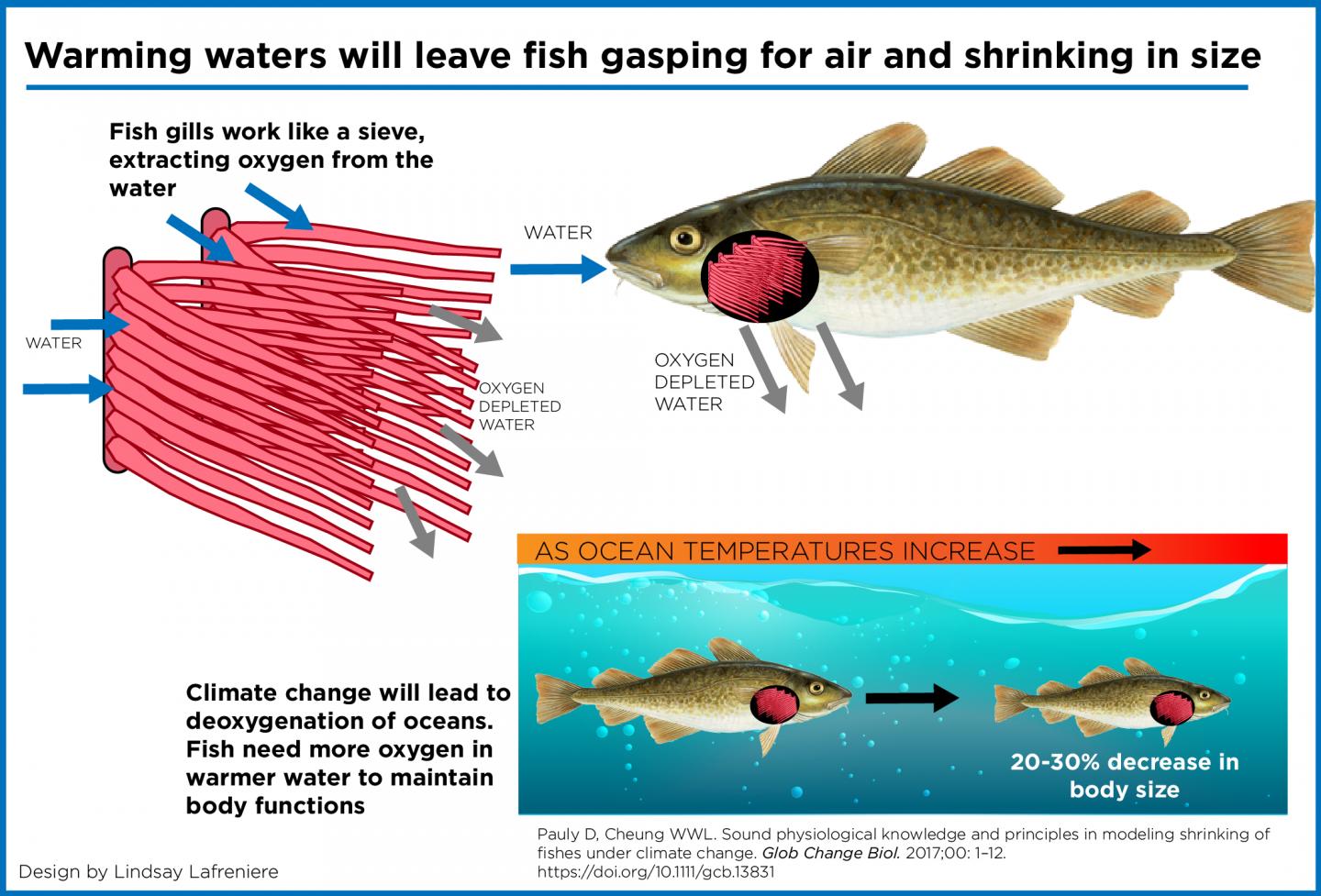 Source: Lindsay LafreniereIf ocean temperatures continue to climb in response to climate change, researchers from the University of British Columbia believe that fish size may be reduced by 20 to 30 percent.
"Fish, as cold-blooded animals, cannot regulate their own body temperatures. When their waters get warmer, their metabolism accelerates and they need more oxygen to sustain their body functions," said William Cheung, co-author of the study, associate professor at the Institute for the Ocean and Fisheries and director of science for the Nippon Foundation-UBC Nereus Program. "There is a point where the gills cannot supply enough oxygen for a larger body, so the fish just stops growing larger."
The theory — called “gill-oxygen limitation theory” — that fish growth is expected to be stunted relies on information about the growth rate of a fish’s body versus the growth rate of its gills. Already a challenge for gill growth to keep pace with body growth, the gills are further challenged as temperatures increase, depleting oxygen levels in the oceans — subsequently impacting the gills’ ability to provide oxygen to the body.
According to researchers, the size reduction in fish can have far-reaching implications on fisheries and among organisms in the ecosystems.