Using Heat to Predict Species Most Threatened by Climate Change
Marie Donlon | May 30, 2017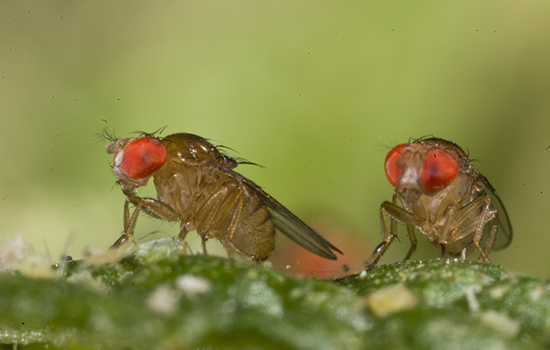 Image credit: Dr. Andrew WeeksTo predict the degree of suffering of a species from the effects of climate change, research from Monash University examines the role of heat resistance (thermal history).
Published in Proceedings of the Royal Society B, biologist Dr. Vanessa Kellerman attempts to determine which species are most threatened by climate change.
"Getting accurate predictions of a species' risk to climate change is no easy task," Dr. Kellermann said.
"One way is to take species from the field and estimate heat resistance and see how close this estimate is to future climate projections," she said.
According to research, a species’ vulnerability to climate change increases the closer that species' heat tolerance is to the maximum temperature of the environment, suggesting that heat tolerance estimates may be affected by a species’ environment.
For instance, species from warm environments might have higher heat resistance than species from cold environments, suggesting that it is influenced by the environment they’ve experienced and not genes, explains Dr. Kellermann.
The study examined heat resistance (a measure for climate change risk) sensitivity to changes in temperature at both development and later at adulthood using the common fruit fly. Researchers found that the temperatures experienced at the development stages had more impact than temperatures experienced as adults.
"Our study shows that current predictions of climate change risk for different species might be influenced by the environment they are collected in," Dr. Kellermann said.