Climate Change May Move Too Quickly for Grasses
John Simpson | October 11, 2016Grasses across the globe may be unable to keep pace with a changing climate, threatening some of the world's most critical food sources, according to new research by University of Arizona (UA) scientists.
Comparing past rates of niche change in 236 species of plants in the grass family with projected rates of climatic change by 2070, a team led by Alice Cang and John Wiens, of UA's Department of Ecology and Evolutionary Biology, found that the rate of future climate change may dramatically outpace the capabilities of grasses to change their niches and survive.
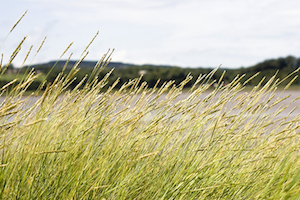 Grasslands cover much of the earth's surface. Image credit: Pixabay. "From an evolutionary perspective, we find that niches change very slowly and often not very much," Wiens says. "The rates of niche change among grass species are often just a few degrees per million years. But now, species may need to make similar changes in less than a hundred years."
When a species faces a rapid shift in its local climate, three outcomes are likely, according to the researchers: it can move to higher elevations and latitudes to stay within its original niche conditions; shift its niche to encompass the new conditions; or become extinct.
To estimate past rates of climatic niche shifts, the researchers reconstructed ancestral values of each climatic variable for the ancestor of each pair of closely related species. They then looked at the difference between the current estimated niche value for each species and that of its most recent common ancestor, which gives the niche shift each species had undergone during its evolutionary history.
They then compared the pace of these niche shifts to the pace of climatic change from three projected scenarios representing minimum, maximum and intermediate levels of future change. Rates of niche change in temperature variables typically fall between 1 and 8 degrees Celsius per million years, whereas rates of future change are projected to be approximately 0.02 degrees Celsius per year—about 3,000 - 20,000 times faster.
The researchers caution that their results cannot show directly what will happen in the future because of the inherent difficulty of predicting the effect of climate change on species and populations. For example, niche shifts might be much faster over shorter time periods. However, the amount of niche change needed to match projected climate change might still be too much for many species.
According to the researchers, other lines of evidence support the conclusion that niche shifts might be too slow to save local populations and species from extinction under climate change. For example, field experiments revealed that individuals of a grassland plant species did not fare well when transplanted to warmer and drier locations. Also, many plant species already are showing local extinctions in the warmest parts of their geographic ranges.
"These different lines of evidence suggest that many species may not be able to evolve out of danger on their own," Wiens says. "Considering that grasses are one of the most important groups of plants for humans, there may be serious consequences."