Nanostraws Sample Cells Without Damage
Engineering360 News Desk | March 01, 2017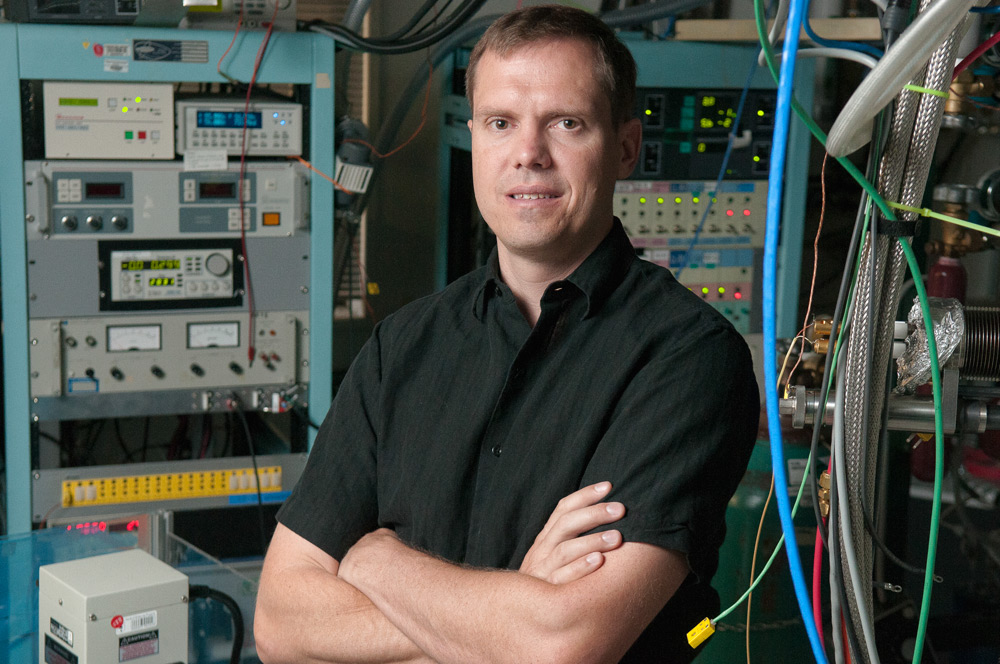 Associate Professor Nicholas Melosh developed a new, non-destructive system for sampling cells with nanoscale straws. Image credit: L.A. CiceroCell sampling, or lysing, techniques used by biologists tend to disrupt natural processes and destroy the cell. Non-destructive sampling is now possible with a system that relies on tiny tubes 600 times smaller than a strand of hair.
These ‘nanostraws’ allow researchers to sample a single cell at a time, penetrating a cell’s outer membrane without damaging it. The Nanostraw Extraction (NEX) sampling system designed by Stanford University researchers provides a reliable measure of the cell content. A comparison of NEX cell samples with other samples taken by breaking cells open showed that 90% percent of the samples were congruous.
The NEX sampling method was also tested with generic cell lines and human heart tissue and brain cells grown from stem cells. In each case, the nanostraw sampling reflected the same cellular contents as lysing the cells.
The technique may broaden understanding of cell development, improve the safety of medical therapies, and inform cancer treatments.